

Case Study: UEFA Men’s Club Competition Finals Broadcasts in the United Kingdom and Their Repercussions (June 2026)
This season was unique for the football fans in England.
This season was unique for the football fans in England. For the first time after the reform of the football men’s club competition by UEFA in 2021 and the creation of the Conference League, English clubs were present in all three major men’s club competition finals. Crystal Palace has won the Conference League, Aston Villa proved to be the best in the Europa League, and Arsenal has lost the Champions League final after a dramatic shoot-out against Paris Saint Germain.
TNT Sports was the exclusive TV and streaming broadcaster of these games, including also earlier phases of competition (excluding Champions League one match each Tuesday available only on Amazon Prime Video). The group started its actions on the British market three years ago, after Warner Bros. Discovery bought stakes in BT sports venture. The current broadcasting deal has been in place since the 2024/25 season and will end in 2027.
However, in this season the approach to the broadcasting of the Champions League final was different than in previous years. Even in the era of the European Cup, final match live coverage was broadcast free-to-air in the United Kingdom, except for technical difficulties in the early years of the competition and a ban on the entry of the English teams in the UEFA club tournaments in the second half of the eighties. After losing broadcasting rights to the Champions League by ITV in 2015, BT Sport (later TNT Sports) tried to show the final matches to the widest possible audience, sharing coverage on a special channel in linear television (including Freeview), later on focusing on broadcasting games on their YouTube channel, with the change to Discovery+ after rebranding into TNT Sports. Finals in 2024 and 2025 were available on that platform, but access required a free sign-up process.
Discovery+ was relaunched as HBO Max at the end of March in the British market. The change of the platform meant also the end of the free Champions League final broadcast. However, Warner Bros. Discovery replicated their past strategy from other major sports such as The Olympic Games they have distributed in European markets. This allows users from all tiers to access the coverage of all men’s European competition finals, without the requirement to buy a separate sports package. It also meant that users that had access to the HBO Max offer from other TV and telecommunication providers like Sky (offering Basic with Ads package) could watch all three final matches.
However, putting the Champions League final live coverage behind the paywall, especially with the participation of the English club, sparked massive upheaval among the English society. UK Prime Minister, Sir Keir Starmer, has written an open letter to TNT Sports to change the rules of the distribution of the broadcast, making it free-to-air. The company has not changed its approach and was not required to do so. The Champions League final is not a listed event, so it does not have to be shown live on the free-to-air outlets. Highlights of the match were available on the BBC One two hours after its finish, as a part of the broadcasting rights deal.
Even if HM government decides to put the Champions League final on the “crown jewels” list, it would come into force in 2032 as newly implemented rules cannot apply to the already signed deals. Paramount won the rights to the vast majority of the Champions League broadcasts from 2027 till 2031 (Amazon Prime managed to retain its rights to show one chosen Tuesday game on an exclusive basis) with Sky Sports showing all UEFA Europa League and Conference League matches in the same timeframe. Still, Paramount’s strategy is unknown and with the upcoming acquisition of Warner Bros. Discovery assets in the nearest future, it is possible that Champions League coverage will be still available on the TNT Sports channels.
This case study focuses on the impact of the finals on the UK streaming market. Based on our internal data we will assess the changes of popularity in streaming platforms at that time, especially HBO Max, analyse the subscription plans of football game viewers, the differences in their preferences when it comes to other content available on HBO Max in comparison to people, who have not watched football broadcasts. Participation of the English clubs in these matches and coverage distribution made co-viewing more popular than usual, especially the Champions League final, which was held for the first time at 5pm British time. It took place on Saturday, while other finals were played on Wednesday evenings.
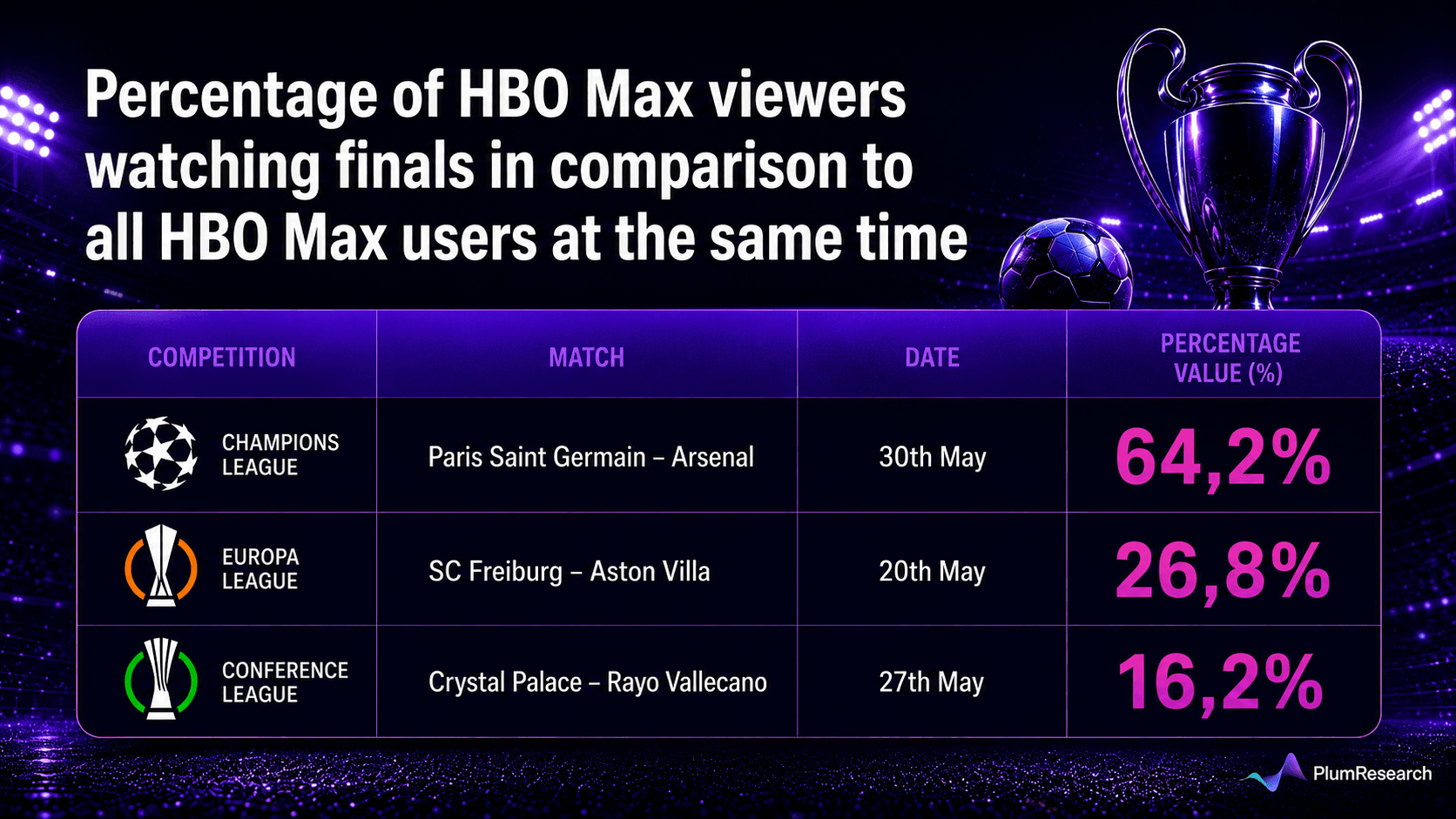
As it could be expected, the Champions League final was the most popular broadcast here, which correlates with the range of competition and size of fanbases of the particular teams in England. Aston Villa has more supporters than Crystal Palace, also the Conference League does not have such a rich history as two aforementioned tournaments.
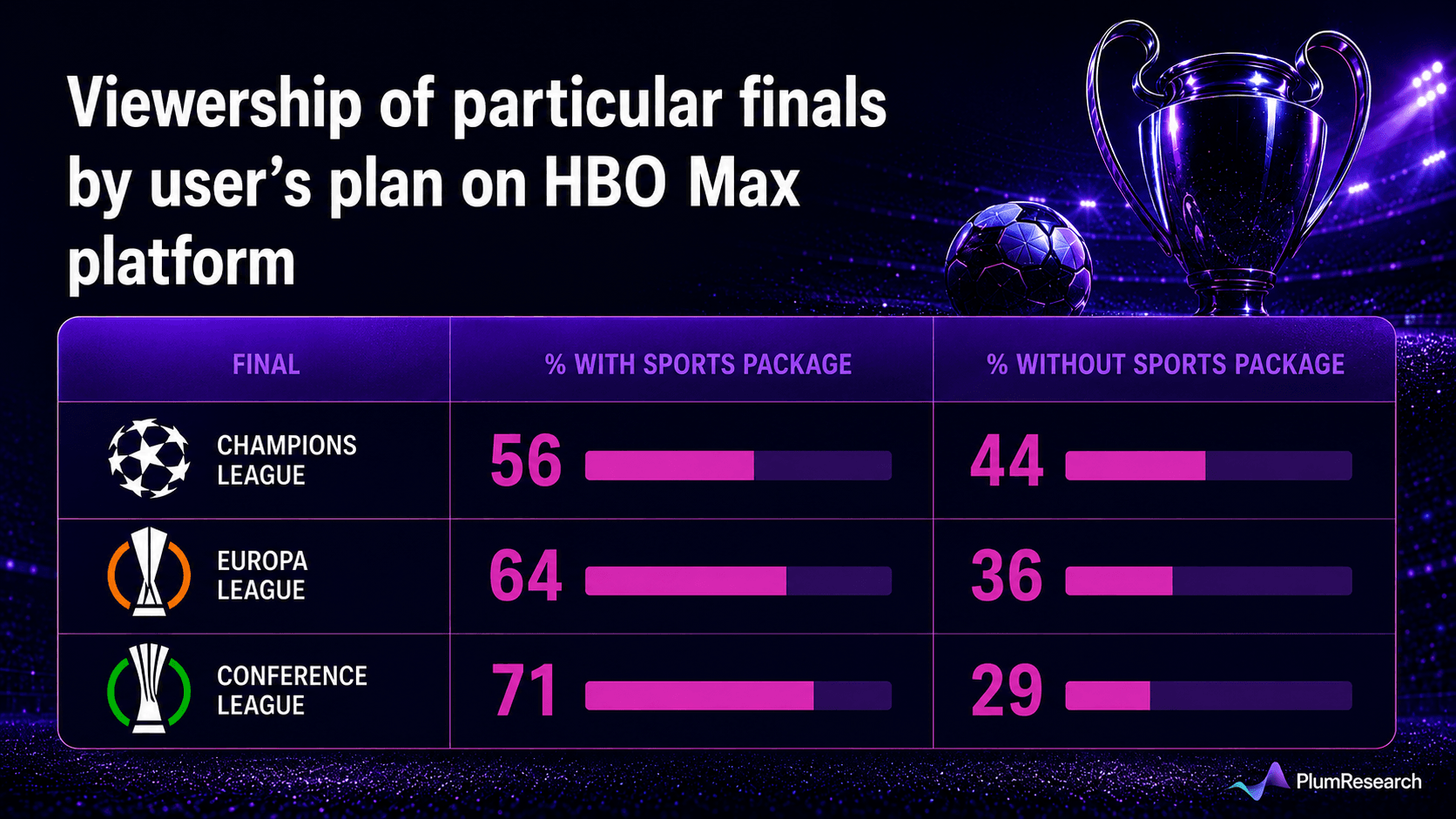
Among all analyzed games, people not subscribing to the sports package were most interested in watching the Champions League final. Users without the sports package were in a major minority of the Conference League final viewers, showing that the tournament is mostly followed by people, who are dedicated football fans and had to buy a separate tier to follow earlier phases of the competition.
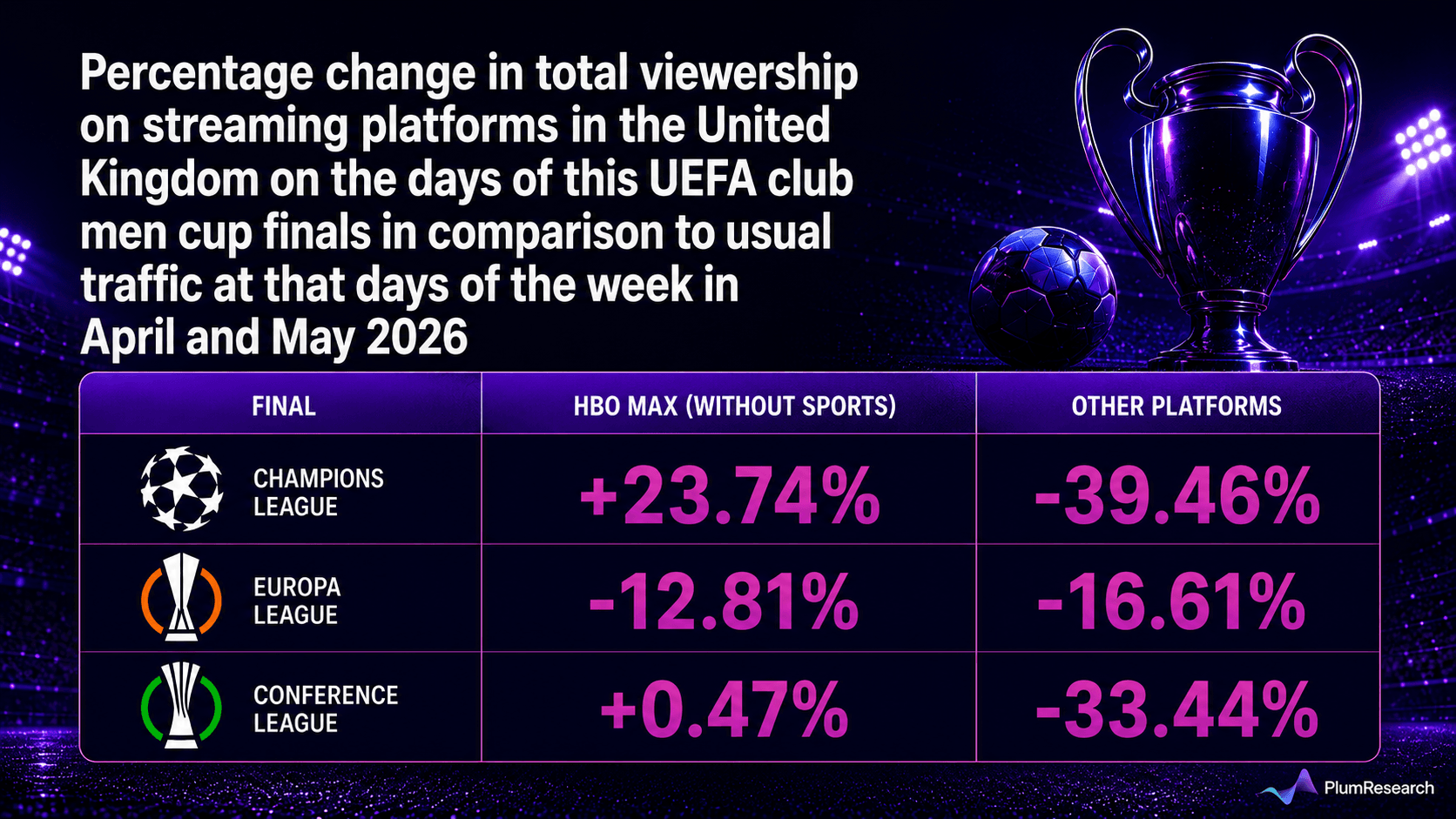
When it comes to the overall popularity of other content on the streaming platforms in the UK, the day of the Champions League final was a huge success for HBO Max platform. While other platforms had traffic lower by nearly 40%, compared to the usual Saturday in April and May this year, HBO Max had increased their viewers base by almost a quarter, not counting sports broadcasts. It proves that interesting sports broadcasts can be a great incentive for viewers to discover other content than sports on the platform.
The average viewer of at least one UEFA men’s competition final in May has watched, during May, 19.4 hours of non-sports content on HBO Max. Among all British users of the platform this value was over twice as small, just 8.4 hours. So users passionate about sports have a greater engagement with the platform overall. This bond can convince them to buy subscriptions even outside sports season to be in touch with other platform content.
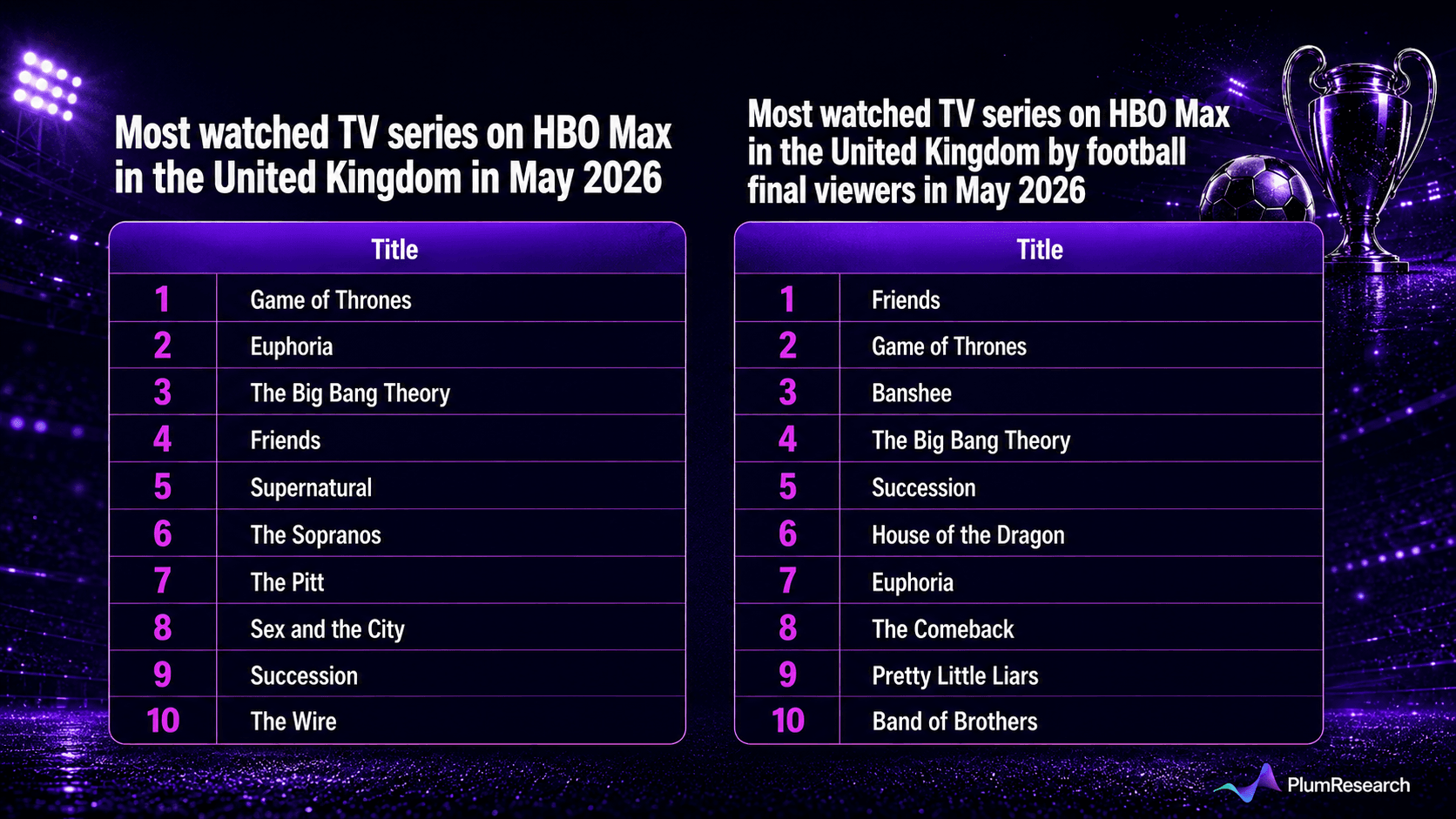
What catches the attention is the number of older productions on the list. This can be explained by the fact that HBO Max started its operations on the British market at the end of March and for people not subscribing to Sky services it was a first chance to watch HBO branded TV series on streaming.
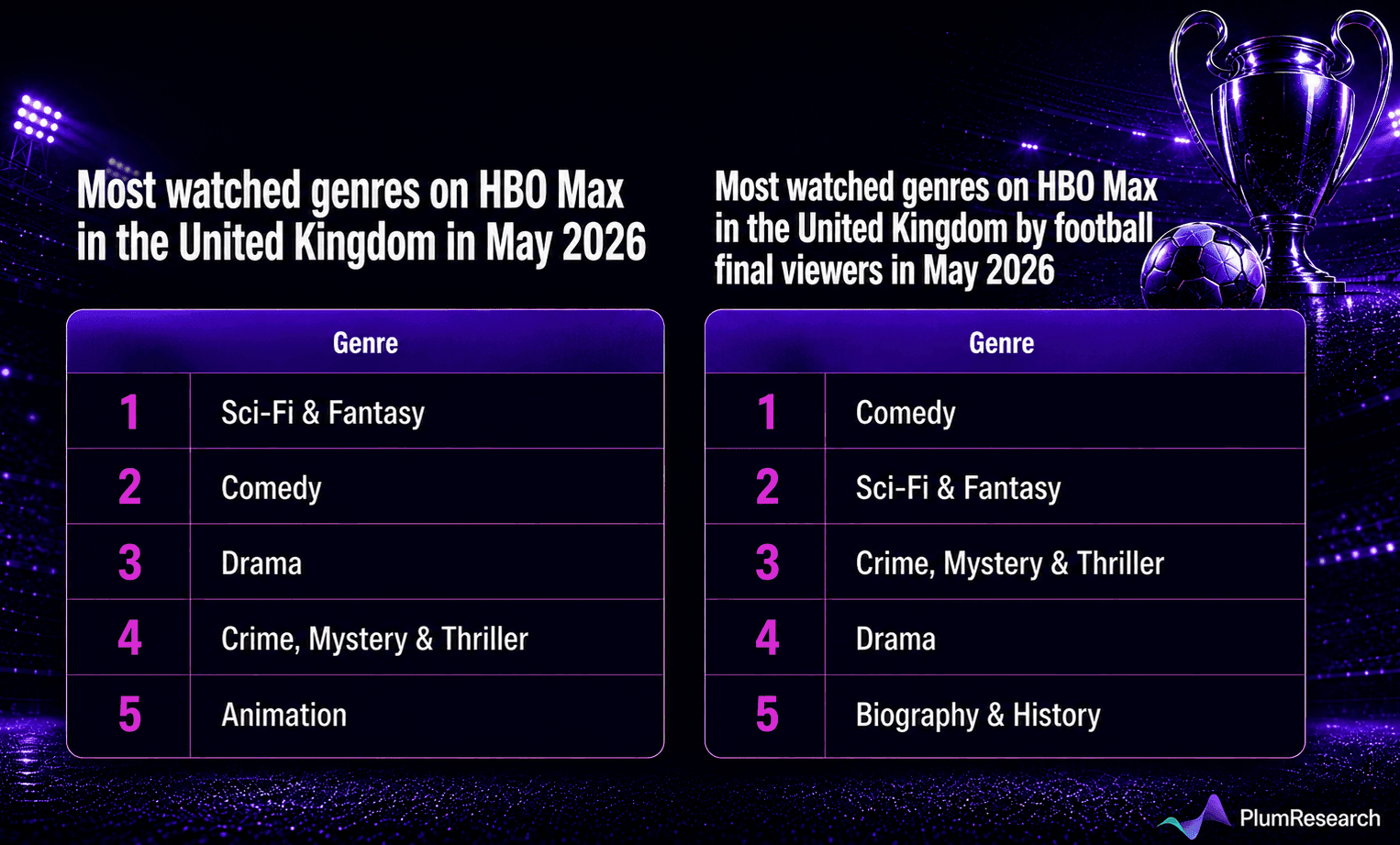
People who watched at least one European club competitions football final on HBO Max this May are more keen to watch comedies than the overall population of HBO Max users in the United Kingdom. They also tend to be more interested in crime, mystery and thriller, including non-fiction content.
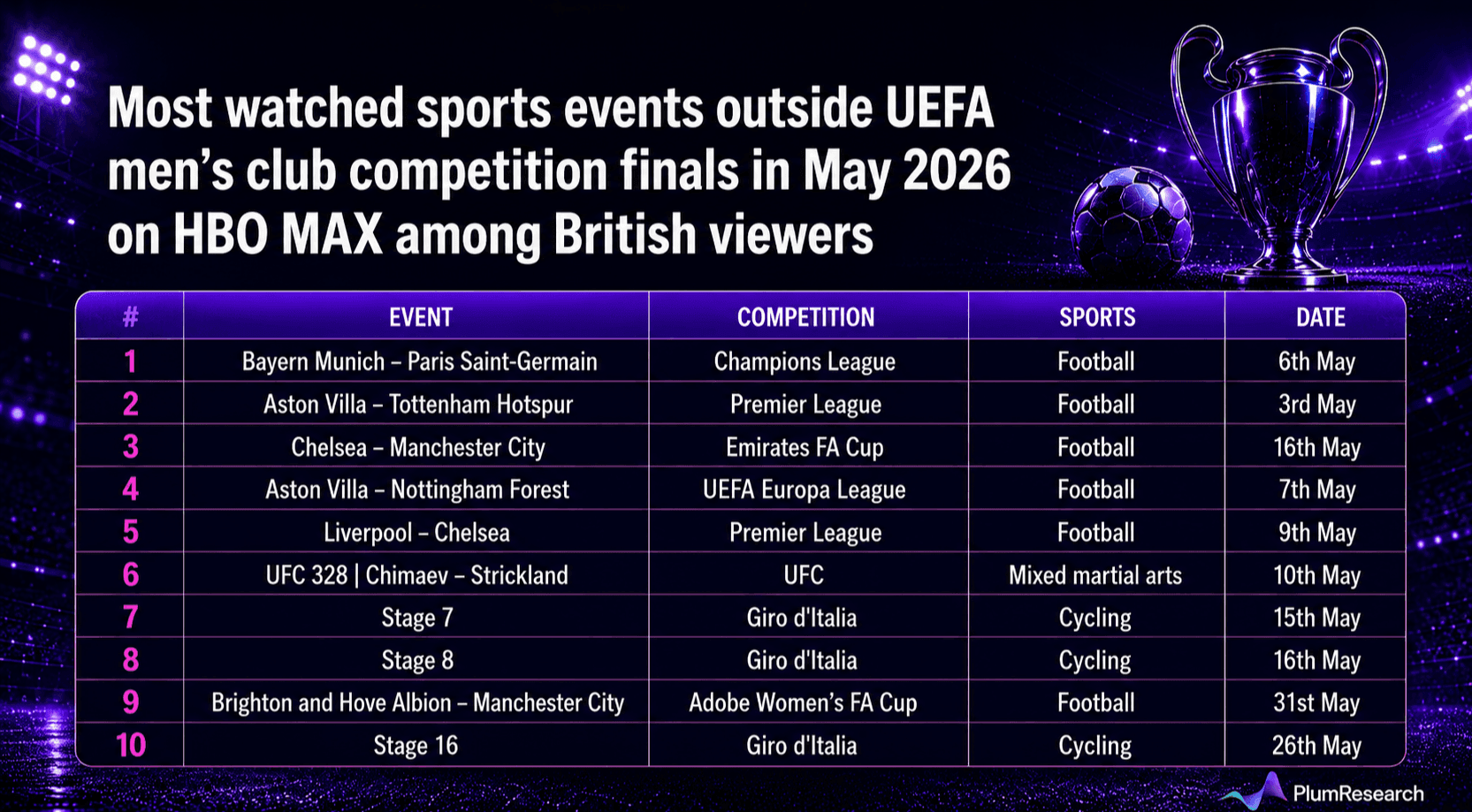
Even outside the final matches of the Europa club competition, football games were at the forefront of the sports viewership ratings on the HBO Max platform. Outside of the Bayern - PSG match, which was highly expected due to the high intensity of the first leg (available only on Amazon Prime Video), all five most popular broadcasts were games between British teams. High interest in the UFC event shows that young people, who most frequently watch TNT Sports offer via streaming, are passionate about the mixed martial arts. Also grand cycling tours have a loyal fanbase, most keen to watch mountain stages as in this year's Giro d’ Italia edition.
The case of the UEFA men’s club competitions finals broadcasts in the United Kingdom is the perfect example that events earlier associated with linear television can find their place in the streaming. On the other side, there were some signals about high piracy metrics, most frequently during the Champions League final. The best way to avoid this issue is to ensure easy and free access to the events of national significance on the platform. As it was shown, sports fans are eager to watch other content available on the platform, so investing in these rights can benefit platforms not only during the major competitions, but all year long.