

Case Study: Traditional National Pastime in the New Era
Netflix baseball in March 2026 and streaming’s shift to live sports.

Streaming in recent years has increasingly become the primary means of distribution for all forms of audiovisual entertainment - excepting live sports. Initiatives taken by the streaming platforms to move into live sports have been marred by various issues. Stability of the broadcast plays a huge role in live content - no one wants to miss important moments of an event, staring at a loading loop or a frozen screen caused by network or infrastructure failure. Streaming, with all progress made in recent years, still cannot fully match linear television in the area of live broadcasting. Traditional media have advantage in two important areas for sports fans, providing more stability to the broadcast and lower time delay in showing the feed on user's screen. The events described in this case study avoided any major failures, even with viewership rate counted in the millions of viewers.
Still, even flawless online broadcasts could not convince some people to this form of following sports events, even if it is the only option. Sports fanbases tend to be skewed towards older people and those from rural areas, with social and technological issues with necessary internet access. However, objections to streaming live sports are not limited only to this group. They can be nationwide if: the broadcast event involves the country's national team, is a sports competition of major social significance, and/or has been previously broadcasted on free-to-air television.
This case study focuses on baseball broadcasts shown exclusively on Netflix in the two most important countries for this sport. The Japanese version was the sole broadcaster of the World Baseball Classic, while American and other viewers could watch the opening game of the MLB season only on the streaming platform. In reference to the fanbase, baseball fans tend to be much more conservative than that of other sports.
In both cases, Netflix outsourced the preparation of the broadcast to external entities - Nippon Television and J SPORTS were responsible for preparing the World Baseball Classic coverage, and MLB Network handled the MLB Opening Game.
The World Baseball Classic is the most international competition in baseball. It is the only tournament where players from the world’s best league, Major League Baseball, can play in their national teams. The previous edition was played in 2023 and ended with Japan defeating the USA in the final. The whole tournament was a broadcasting hit in the Land of the Rising Sun, with the vast majority of the population watching games live, even though the most important matches were played in the morning in Japan. National team games, quarterfinals, semifinals and the final were available on the free-to-air terrestrial channels.
This is why the Netflix and MLB announcement in August 2025 caused a huge shock in Japanese society. The streaming platform acquired the rights to broadcast the entire competition, placing even national team matches behind the paywall. According to Japanese media and ‘The Athletic’ Netflix paid over 100 million US dollars for the broadcasting rights to the games, five times more than for previous editions. This resulted in a massive surge in the prize pool of the whole tournament.
Those who did not decide to purchase a Netflix subscription had to rely on highlights presented several hours after the games on Nippon Television. The platform had not been particularly popular before the tournament, and even the upcoming competition did not initially encourage Japanese households to subscribe. Two thirds of respondents in a February survey rejected the idea of buying a subscription to watch the games. In response, Netflix decided to reduce the price of its cheapest plan by half, to 500 yen (3 US dollars). Public viewing was limited to the specially designed venues. Pubs and restaurants did not get a legal permission to broadcast matches to all their customers. Instead, they had to reserve private rooms and provide their own credentials.
Based on our data, we present a ranking of the TOP20 most-watched broadcasts out of all 47 matches played in the tournament:
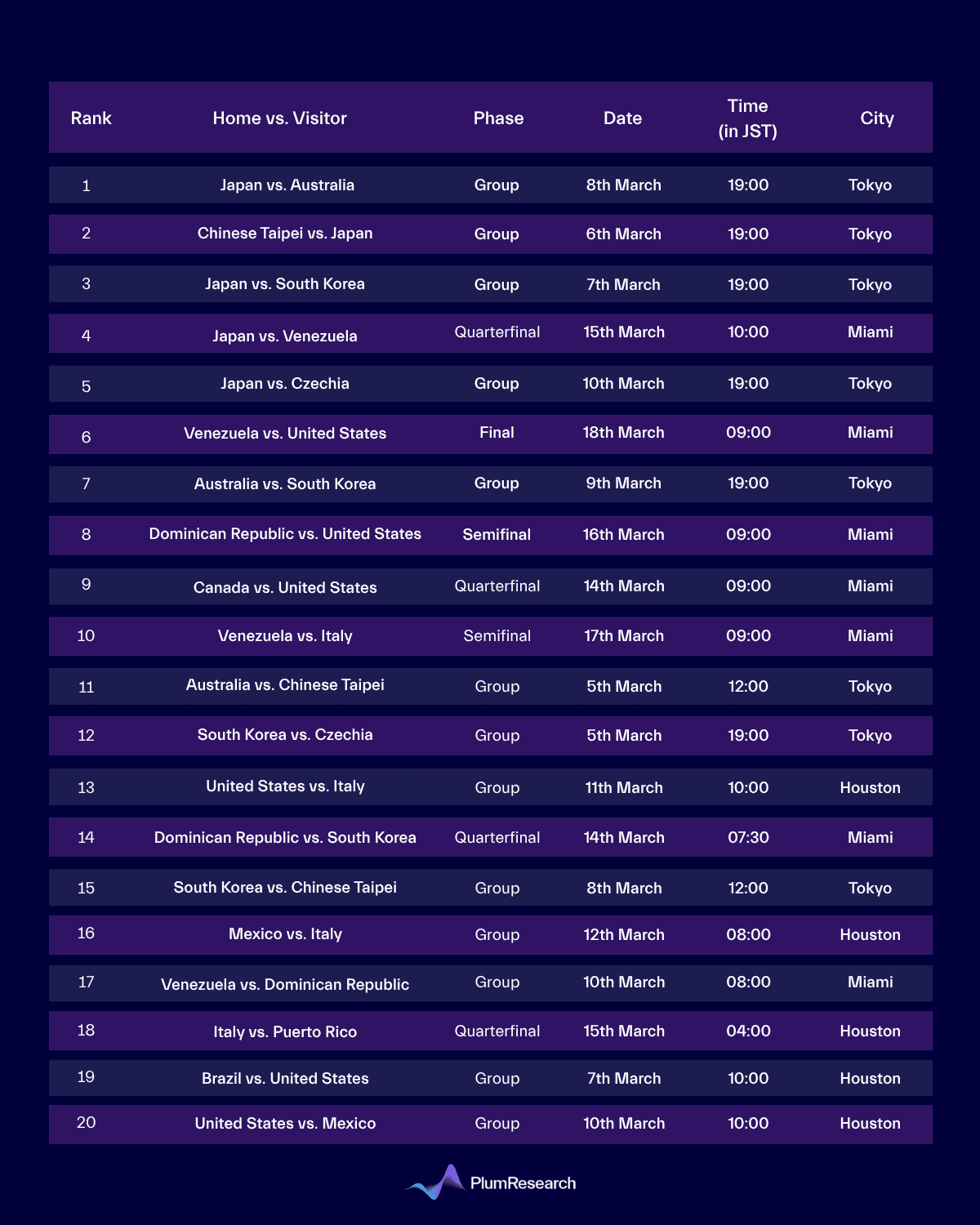
All games of the Japanese national team were not only at the forefront of the World Baseball Classic 2026 broadcasts viewership rankings, but also ranked among the most-watched content on Japanese Netflix in March 2026. Japan, as the defending champion, attracted particularly strong interest. Other popular games included those in the knock-out stage, even though they were played in the US and aired in the late morning in Japan. Matches played in Tokyo that did not involve the Japanese team were also widely watched, especially the tense game between Australia and South Korea, in which, till the last inning, it was not certain which team would advance to the quarterfinals. There was also notable interest in the competition in Pool B matches with the United States, Italy, Mexico, Brazil, and Great Britain. A matchup between two future semifinalists, Venezuela and the Dominican Republic, was also popular among Japanese viewers, despite being played on a Tuesday morning local time.
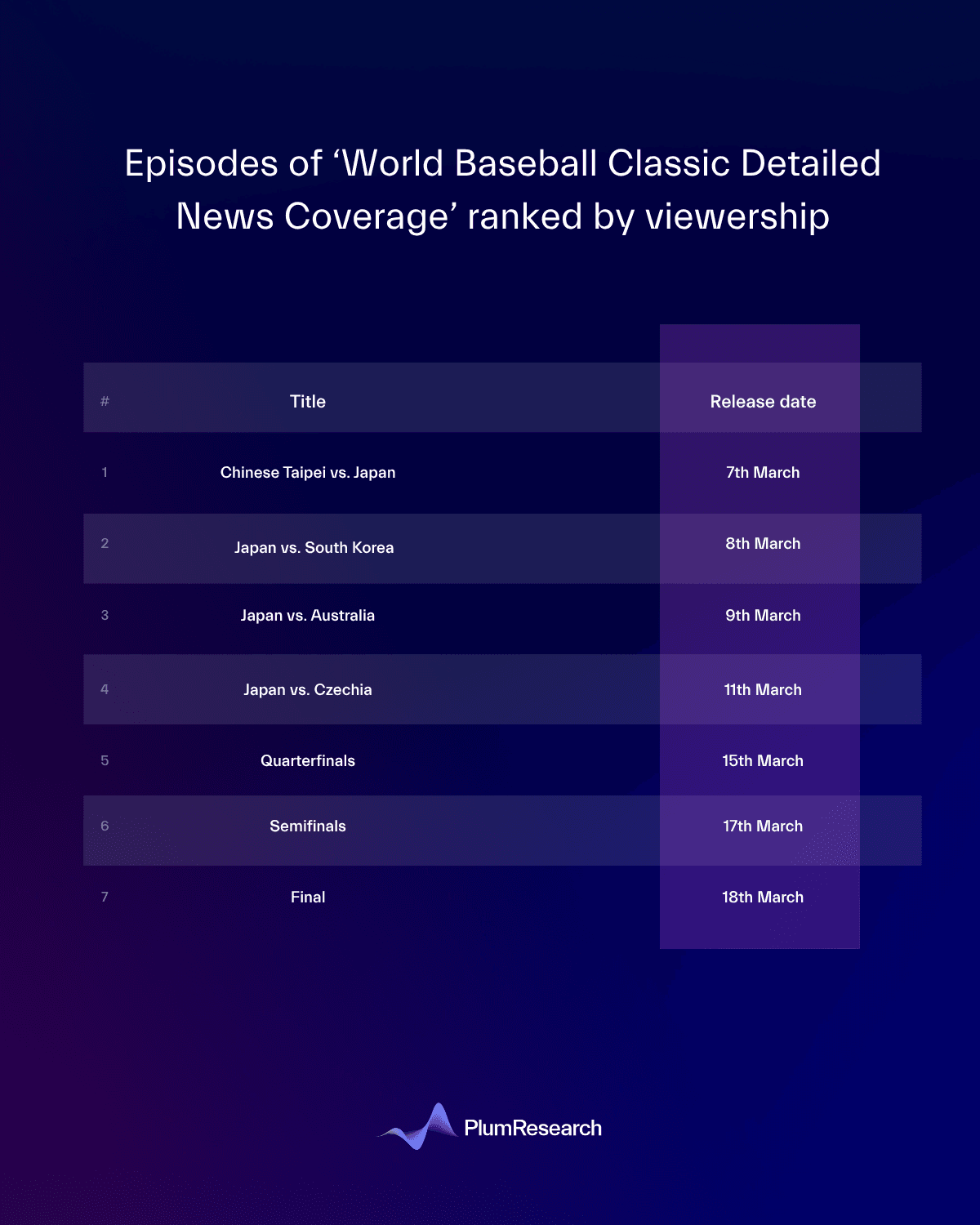
As the decisive stages of the tournament were held in the United States, they were broadcast live in the late morning in Japan. Beyond the games themselves, additional programmes related to the competition were available on the platform. Netflix, in co-operation with Nippon Television, prepared a special show called ‘World Baseball Classic Detailed News Coverage’, designed for both terrestrial television and Netflix. Each of the seven episodes focused on matches of the Japanese team and the knock-out stages of the competition, with commentary from pop-culture stars.
The viewership ranking of these episodes can be found below:
Viewers interested only in sports aspects could watch condensed highlights of the games. Netflix released them for all tournament matches and their length varied between 8 and 15 minutes. It was a good way to follow the tournament for could not spend a few hours watching full games, especially in the morning their time. However, their experience could be spoiled in some way by putting details of the games in the content description, which, unfortunately, was done by Netflix in case of the most important matches.
Here is the list of TOP10 most popular game recaps:
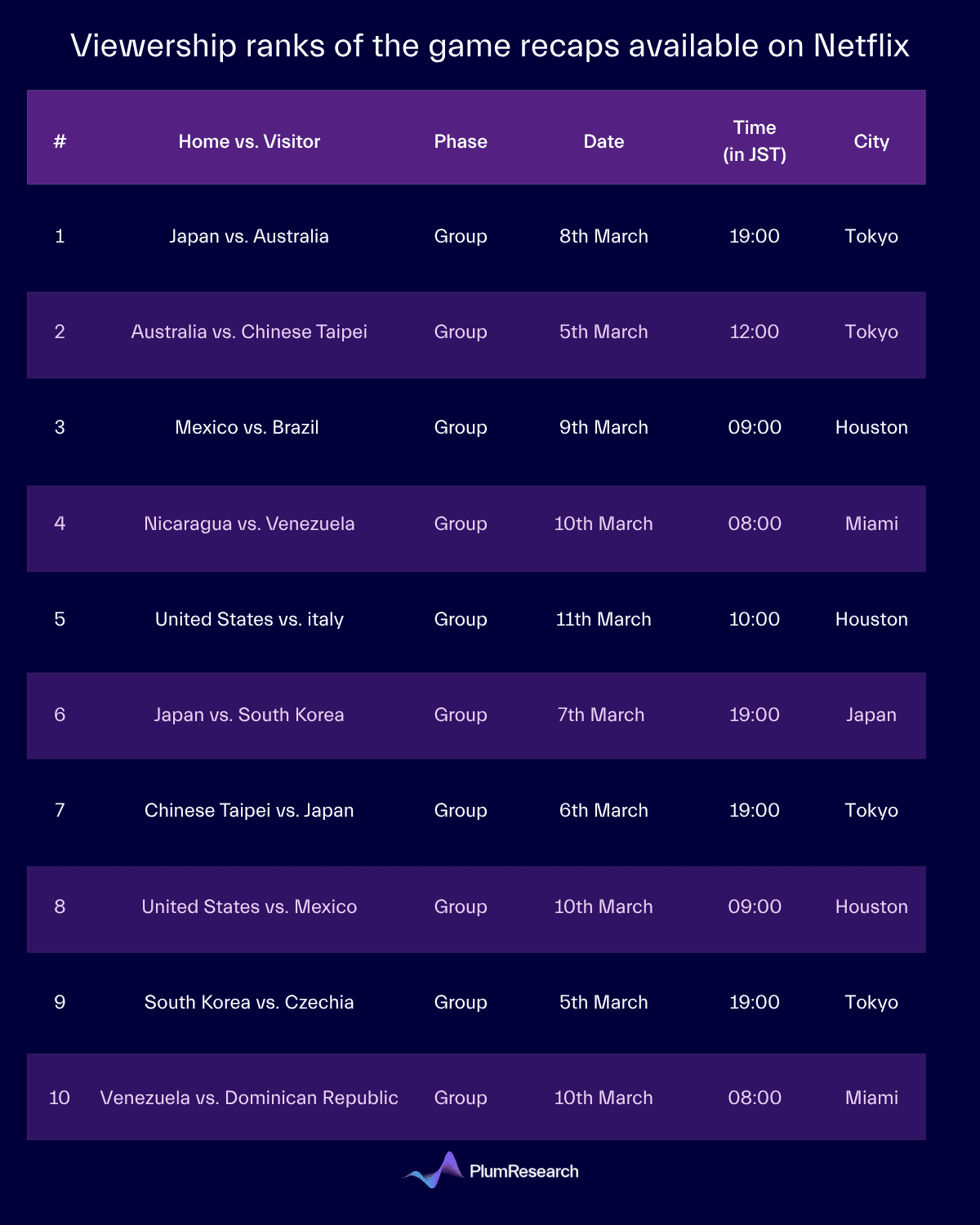
Japanese viewers were interested mostly in the highlights of group stage matches, driven by the need to catch up on action from the Tokyo group or games played in the morning their time. It appears that fan engagement was highest during this phase of the competition. As in the case of previously mentioned special show, viewership peaked at the beginning of the tournament, due to the games of the first stage organized in Tokyo (knock-out stages were held in the United States) and the disappointing result of the Japanese national team, which was eliminated in quarterfinal against Venezuela, the eventual cup winner.
World Baseball Classic consisted of 47 games. However, during the group stage some games were played simultaneously, while the two first quarterfinals overlapped, making it inconvenient for viewers to follow every broadcast. It is therefore worth examining how many games were watched per single viewer:
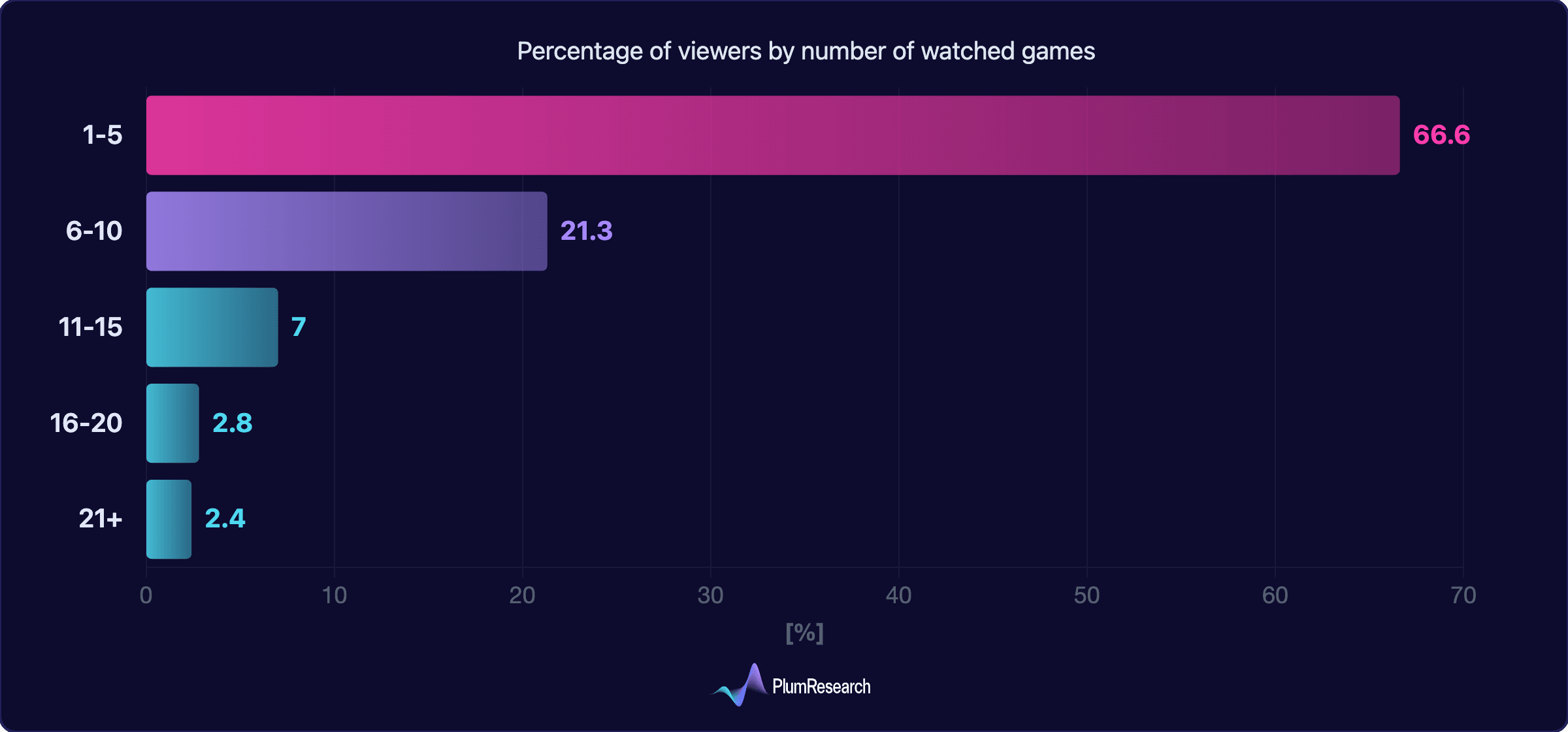
Two-thirds of viewers watched five games or less. The Japanese national team played exactly five games in the tournament - four group stage matches and one quarterfinal. Most engaged fans watched 41 matches, which is impressive given the structure of the tournament. Beyond the broadcasts and aforementioned shows, Netflix also provided additional baseball-related content, such as documentaries. Let’s take a look at their popularity on the platform in February and March among the Japanese audience:
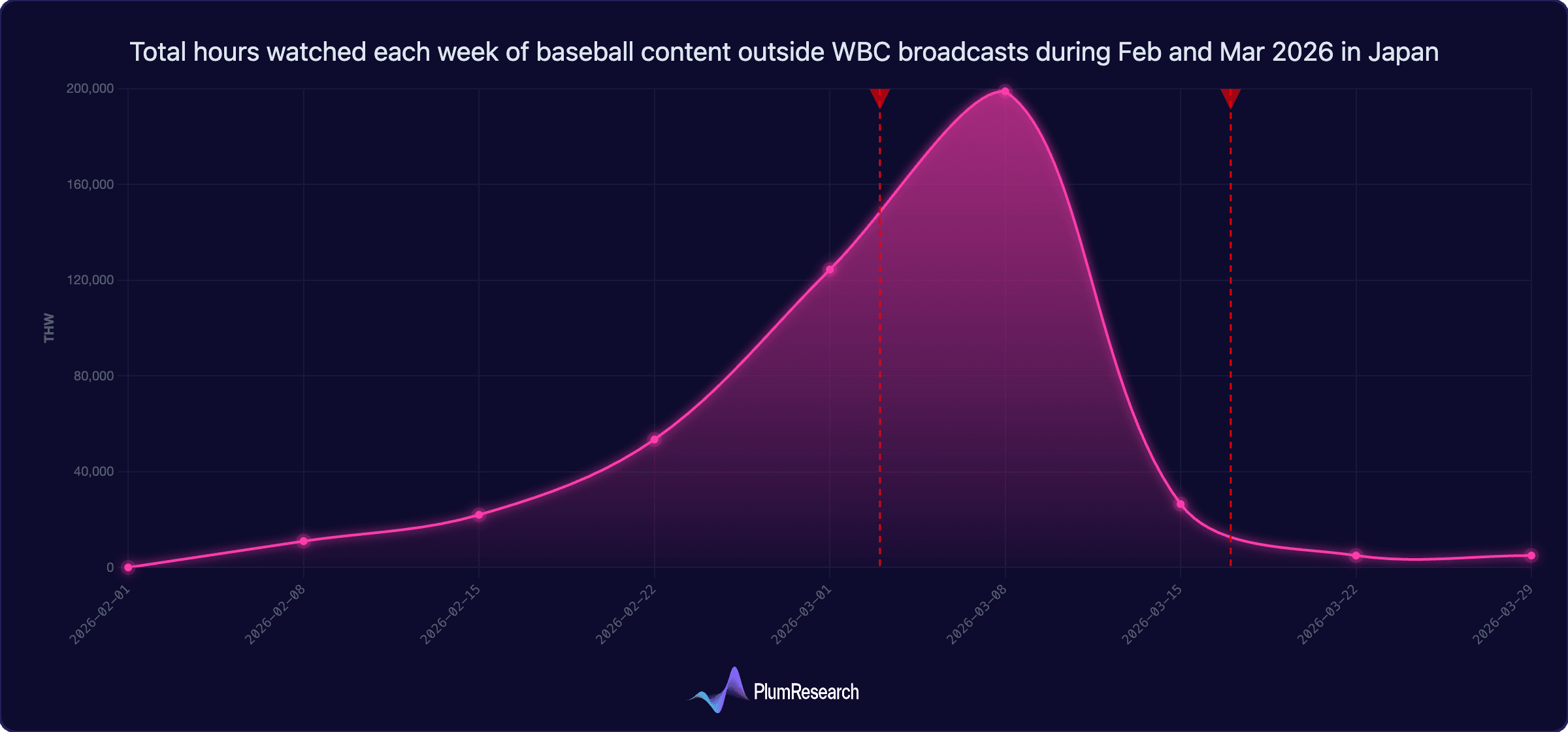
It seems that popularity reached its peak at the very beginning of the tournament (marked by the red area), before coming to its usual, minuscule values just after the final. There was concern that the surge in interest among Japanese audiences on Netflix would be short term and limited only to the tournament. After the Japanese national team was eliminated, the hashtag ‘#CancelNetflix’ became one of the most popular on the X platform in Japan. Our next analysis will focus on changes in the popularity of content on Netflix during the tournament (excluding baseball-related programming) and compare them to average weekly values from the previous 12 months. The second week of April 2026 would be also taken into consideration to check if declarations of cancelling accounts translated into real-world behaviour.
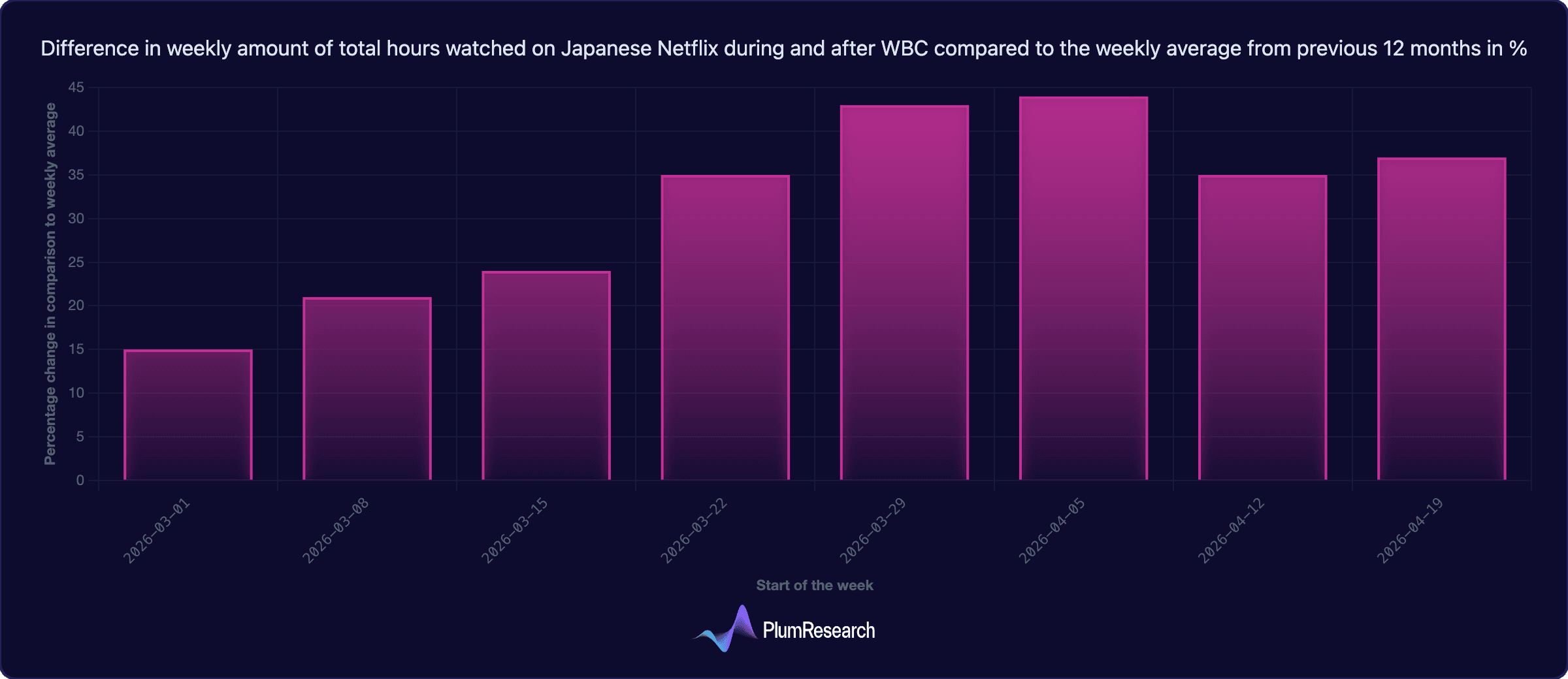
It seems that the popularity of the platform has only increased during this time, reaching levels not seen before, especially after the end of the tournament. Viewers became interested in the offer provided by the platform, even when it was not connected to sport or other important events. However, we can observe a slight decline in a month after the final stages of the tournament, but the platform's popularity is still higher than average values from the previous 12 months. The analysis of the ten most popular genres in the 52 weeks before the tournament and during the World Baseball Classic and weeks after it can be seen below:
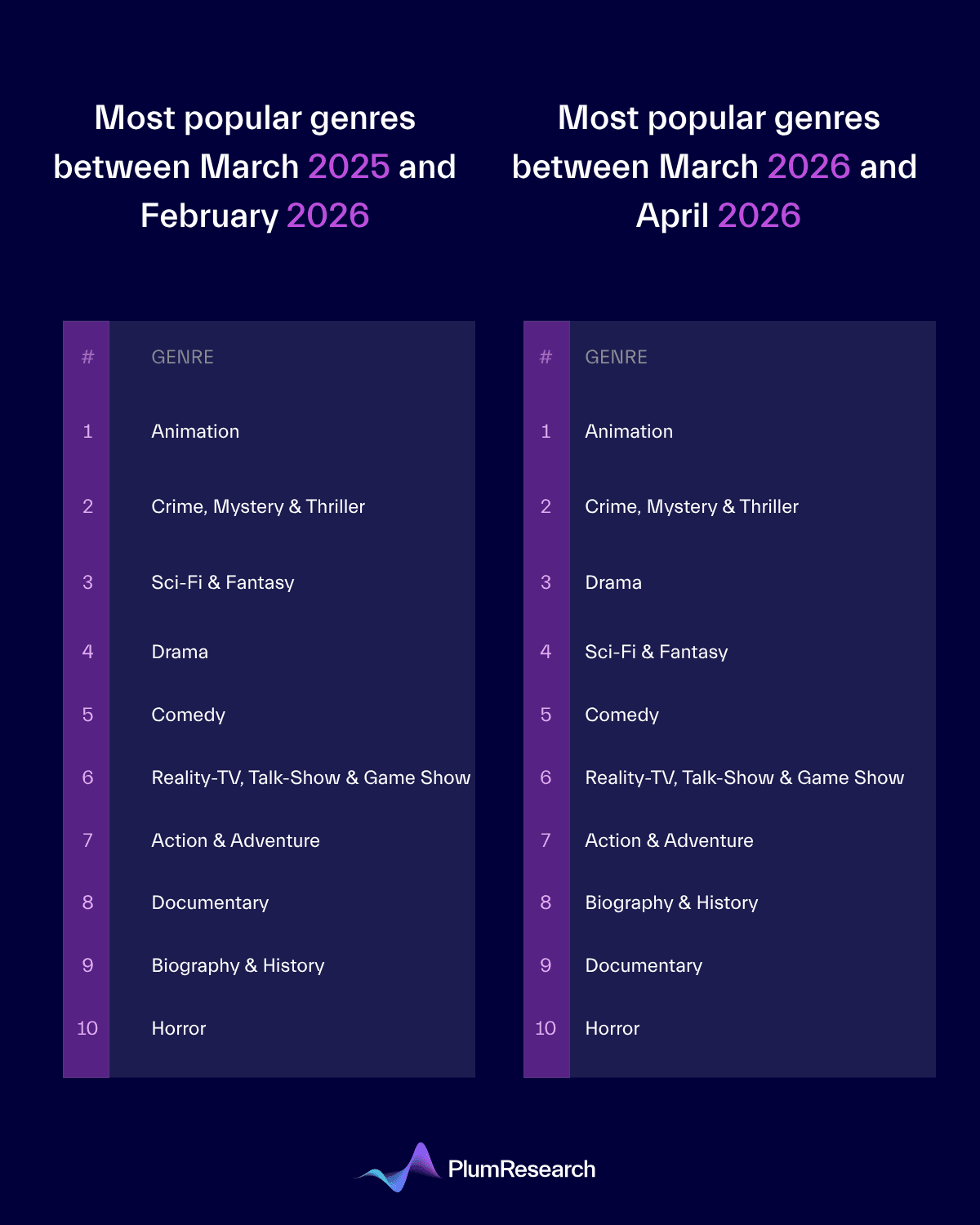
Increase in the popularity of the platform has not made a significant change in the viewers’ preferences when it comes to genres. Content related to drama has risen to third place in the ranking during the World Baseball Classic and in the weeks following it. Animation remains the most popular genre in Japan, as might be expected.
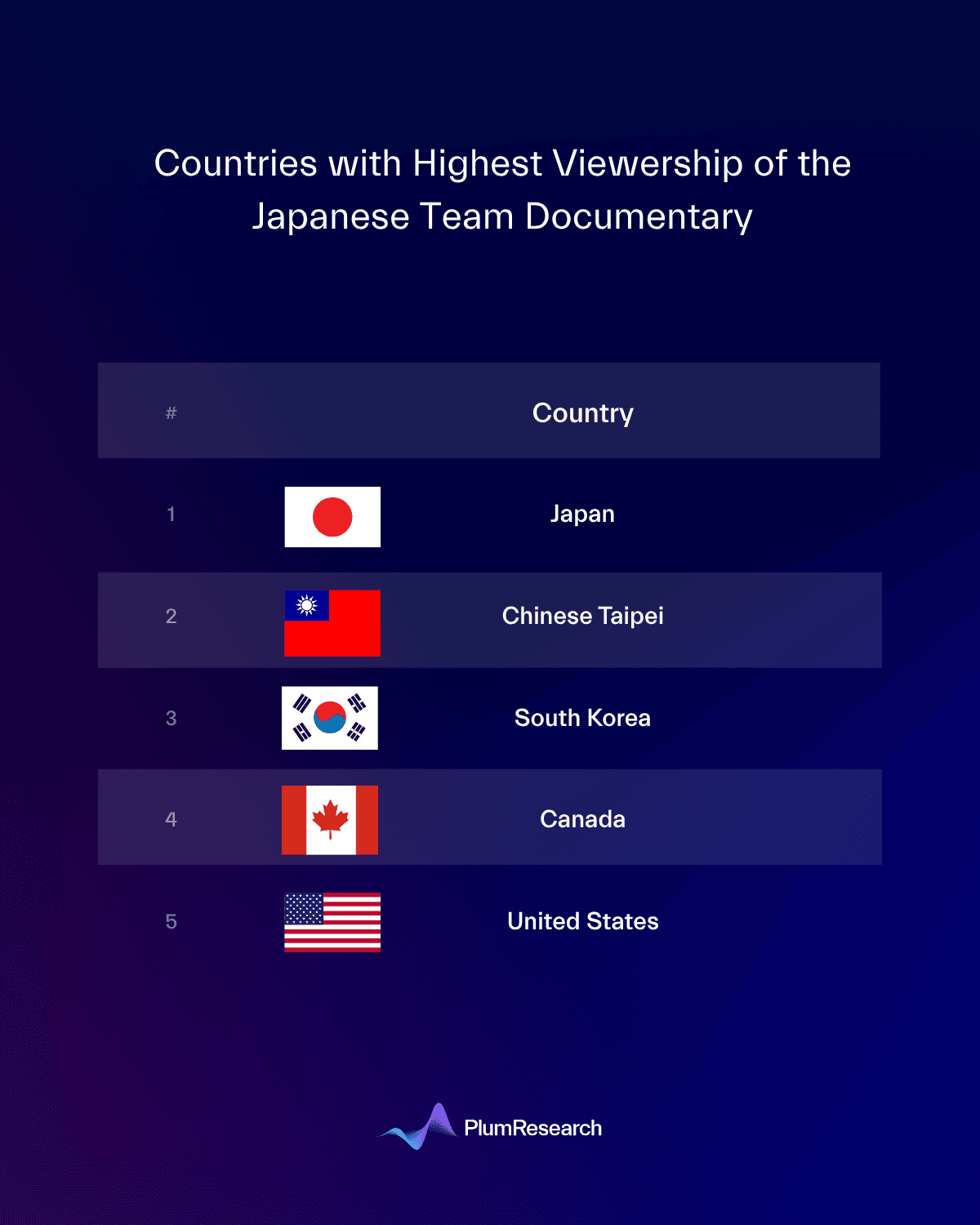
Netflix also produced a documentary about the Japanese team's performance. It was expected that the defending champions would reach the decisive stages of the tournament. As it was previously mentioned, they were eliminated in the quarterfinals. The documentary ‘Beyond the Game: Samurai 2026 WORLD BASEBALL CLASSIC’ was released on the 20th April worldwide. These are TOP 5 countries with the highest viewership level days after its release. All of them have massive baseball fanbases:
In the week after the World Baseball Classic final, baseball fans in Japan and all over the world started following the MLB season. The first league game of 2026, a match between the New York Yankees and San Francisco Giants was shown exclusively live on Netflix. The worldwide deal, according to media reports, costs the platform 50 million dollars yearly. In the package Netflix will show MLB opening games, Field of Dreams games and Home Run Derbys over the next three seasons. Below you can find statistics of viewership for Japan and US, using local timezones and highlighting each game’s duration in the appropriate timezones:
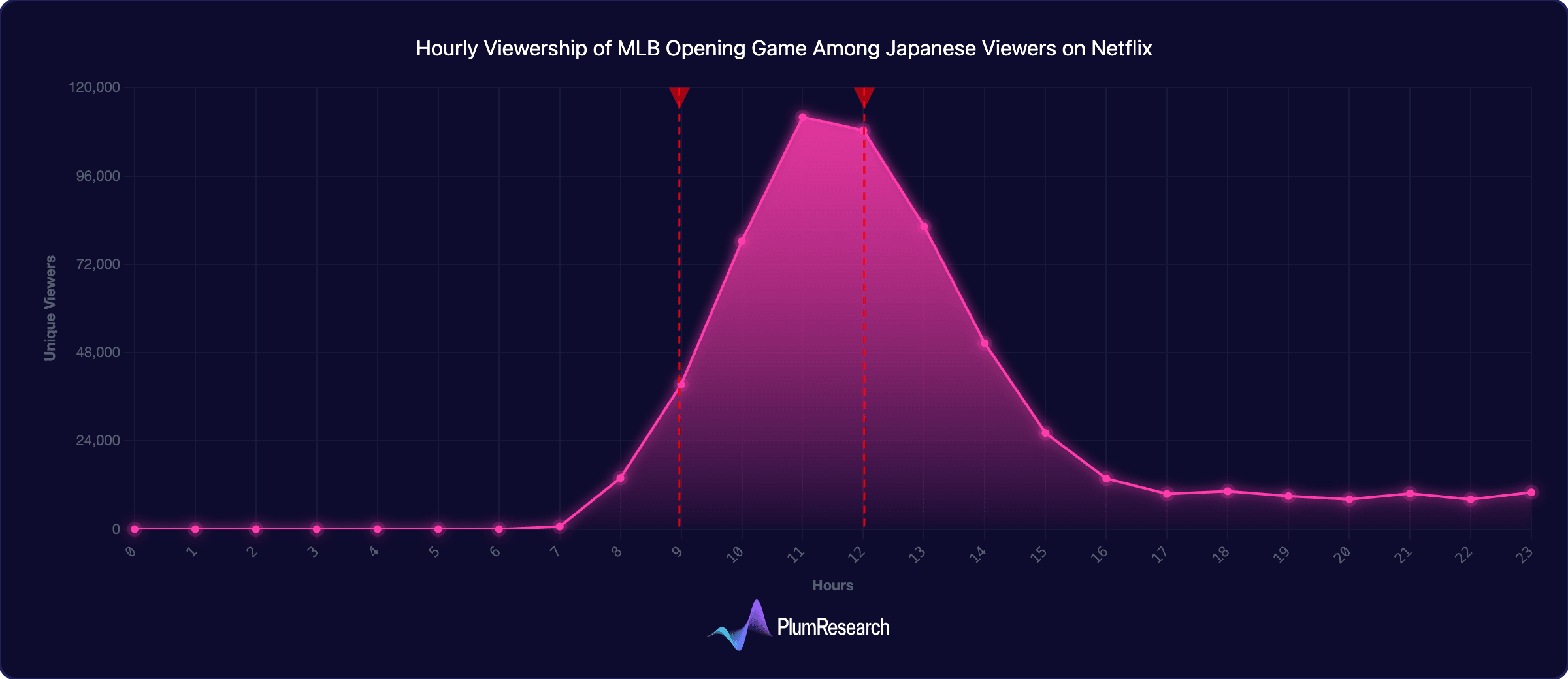
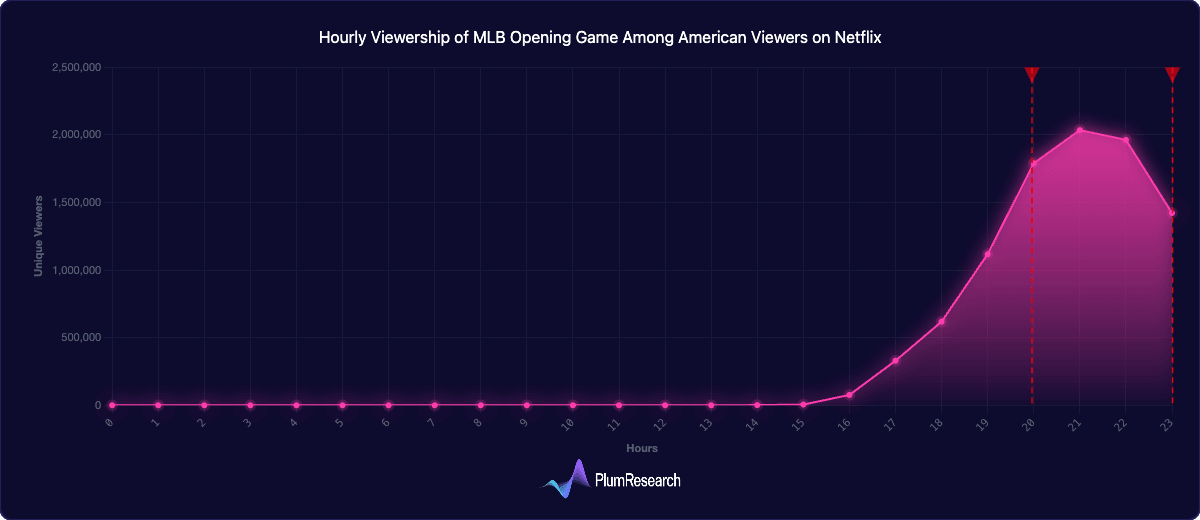
The majority of Japanese viewers decided to watch the game live or with a small delay rather than watching highlights at prime time in their country. As was also the case with the World Baseball Classic, Japanese society is accustomed to watch MLB on free-to-air satellite/terrestrial channels.
The World Baseball Classic showed that Americans are also keen on the idea of watching sports broadcasts without additional fees. Seven games of the tournament were exclusively available on Tubi, and the FAST channel broadcasting them (FOX Sports on TubI) was the most popular on the platform in March 2026. For the first time in the US, some matches were shown on terrestrial television, leading to record viewership in this country, higher than in the previous five editions. In Japan, broadcasts from the previous edition of the tournament in 2023 had better viewership metrics, but it was caused by its free-to-air nature. March games were the most popular programmes in the history of Japanese Netflix.
All in all, investing in key sports rights in a given country can be an effective way to gain more subscribers in previously overlooked markets. It was a key to success in the era of linear television, as in the case of British BSkyB and American Fox. Streaming platforms fully understand the significance of sports, as much as sports organizations, which prepare special broadcast packages tailored specifically to their needs.