Back in Cinemas, Back in the Catalogue: What Anniversary Re-releases Do to Streaming
Classic films returning to cinemas have become a fixture of the studio calendar: a milestone anniversary, a restored print, premium-format screenings ...
Classic films returning to cinemas have become a fixture of the studio calendar: a milestone anniversary, a restored print, premium-format screenings and a marketing campaign to match. We looked at how four such re-releases from 2025 and 2026 translated into streaming viewership, both for the films themselves and for their wider franchises. In most cases the effect is clear, though it does not always look the way you might expect.
Back to the Future: the campaign started before the screenings
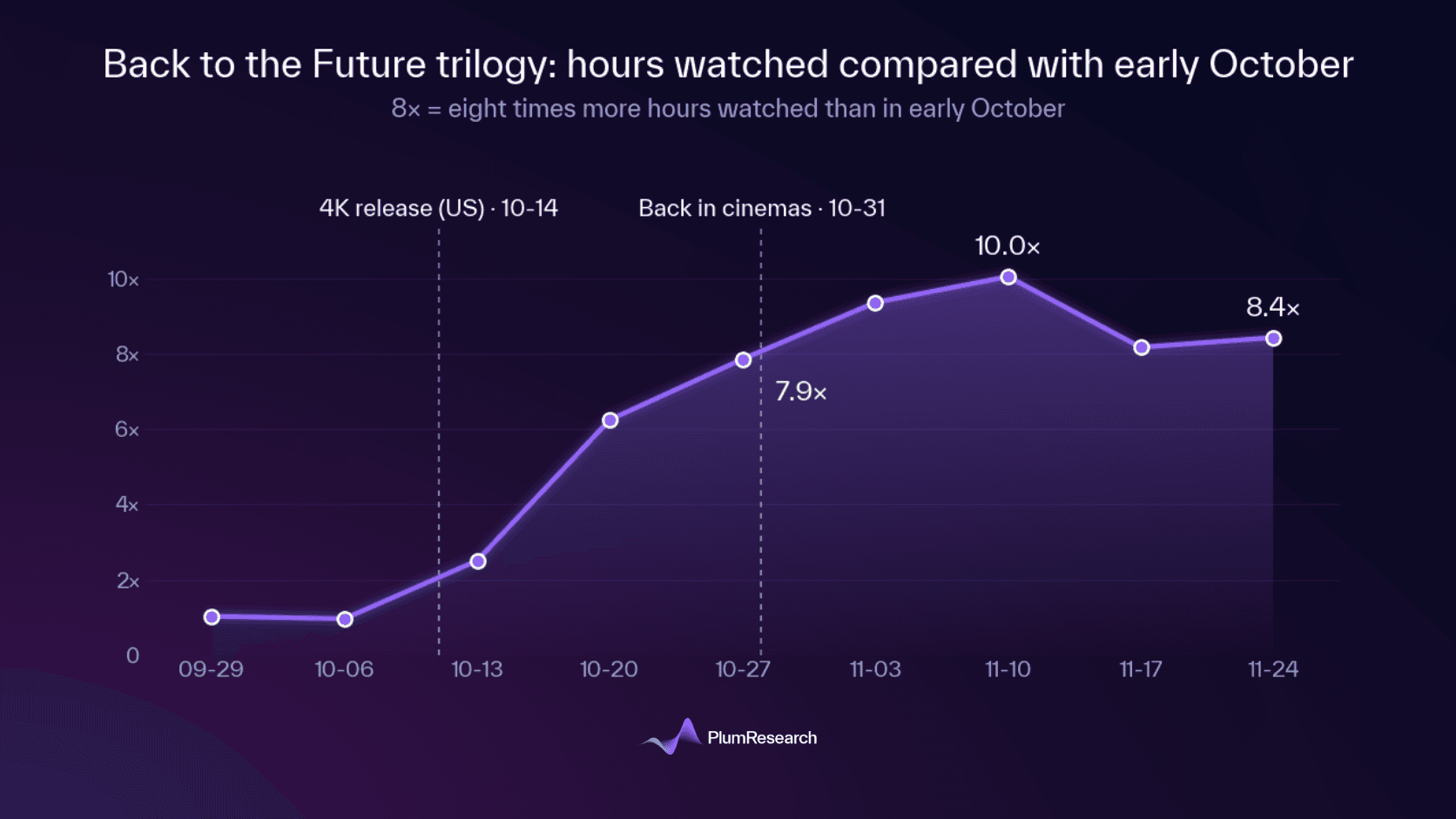
Back to the Future returned to cinemas on October 31, 2025, for its 40th anniversary. In the week of the re-release, total hours watched for the trilogy on streaming were close to eight times higher than in early October, comparing the same markets. Two weeks later they reached ten times the early-October level, and four weeks after the re-release they were still more than eight times higher.
Just as telling is when the growth began. In the week before the screenings, viewing had already reached 80% of the re-release week's level. That coincided with the film's 4K and digital release (October 14) and with Back to the Future Day (October 21). The return to cinemas was the culmination of the anniversary campaign rather than its only trigger.
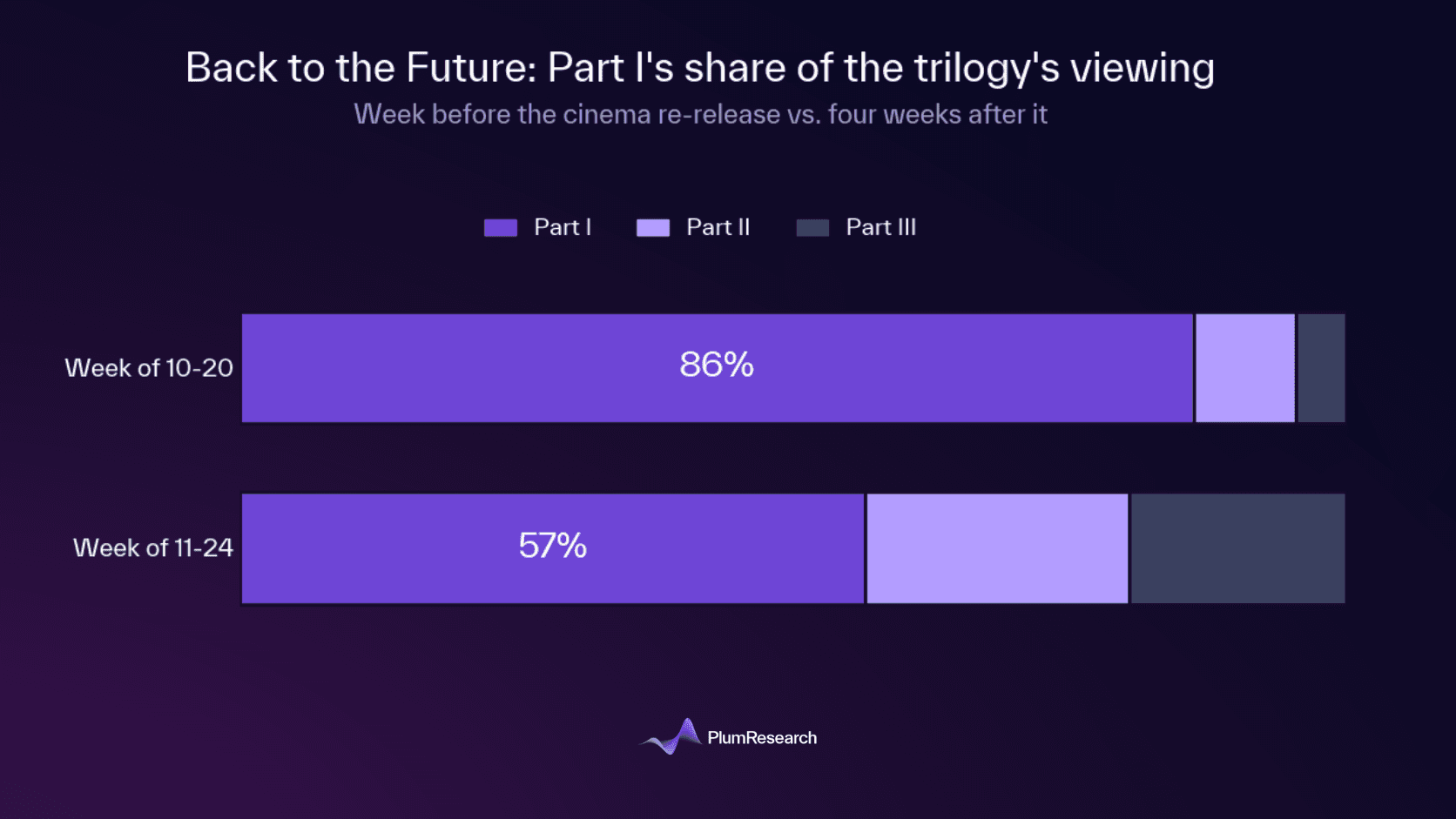
What people watched shifted over time too. In the first two weeks of growth, the first film accounted for around 85% of the trilogy's total hours watched; by the end of November, its share had fallen to 57%, as more and more viewing moved to the sequels. Across the re-release week and the two weeks that followed, the United States delivered around 60% of the increase.
Cars: one film returns, the whole series gains
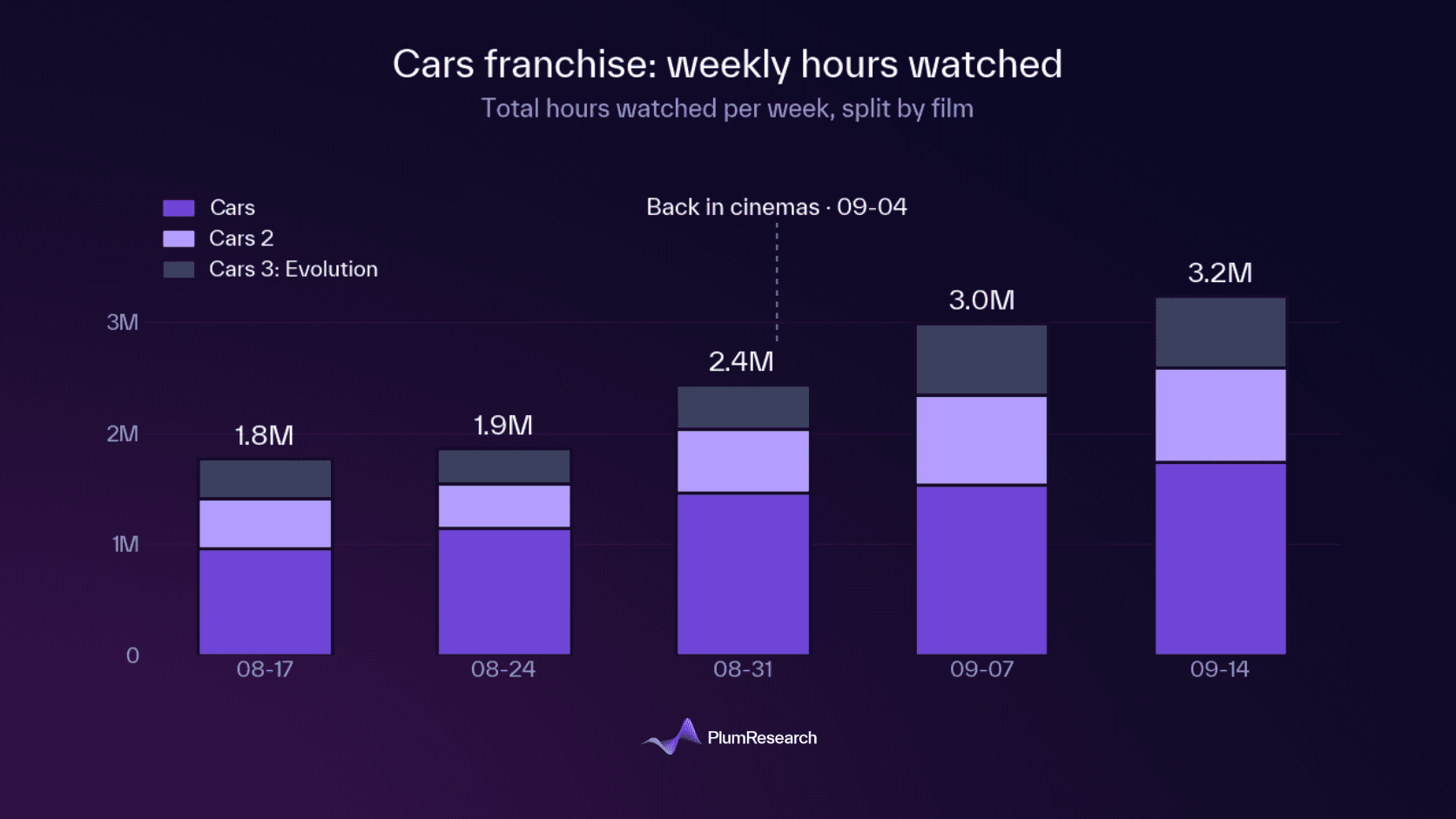
Cars returned to cinemas on September 4, 2026, for its 20th anniversary. Two weeks later, total hours watched for the franchise were 78% higher than the average of the two weeks before the re-release. The film itself grew by 66%, while its sequels grew by 94% combined. Over the same period, the first film's share of the series' viewing fell from 61% to 54%. Around 60% of the increase came from the United States. By mid-September, viewing was still rising.
The Fast and the Furious: a local re-release, a local event
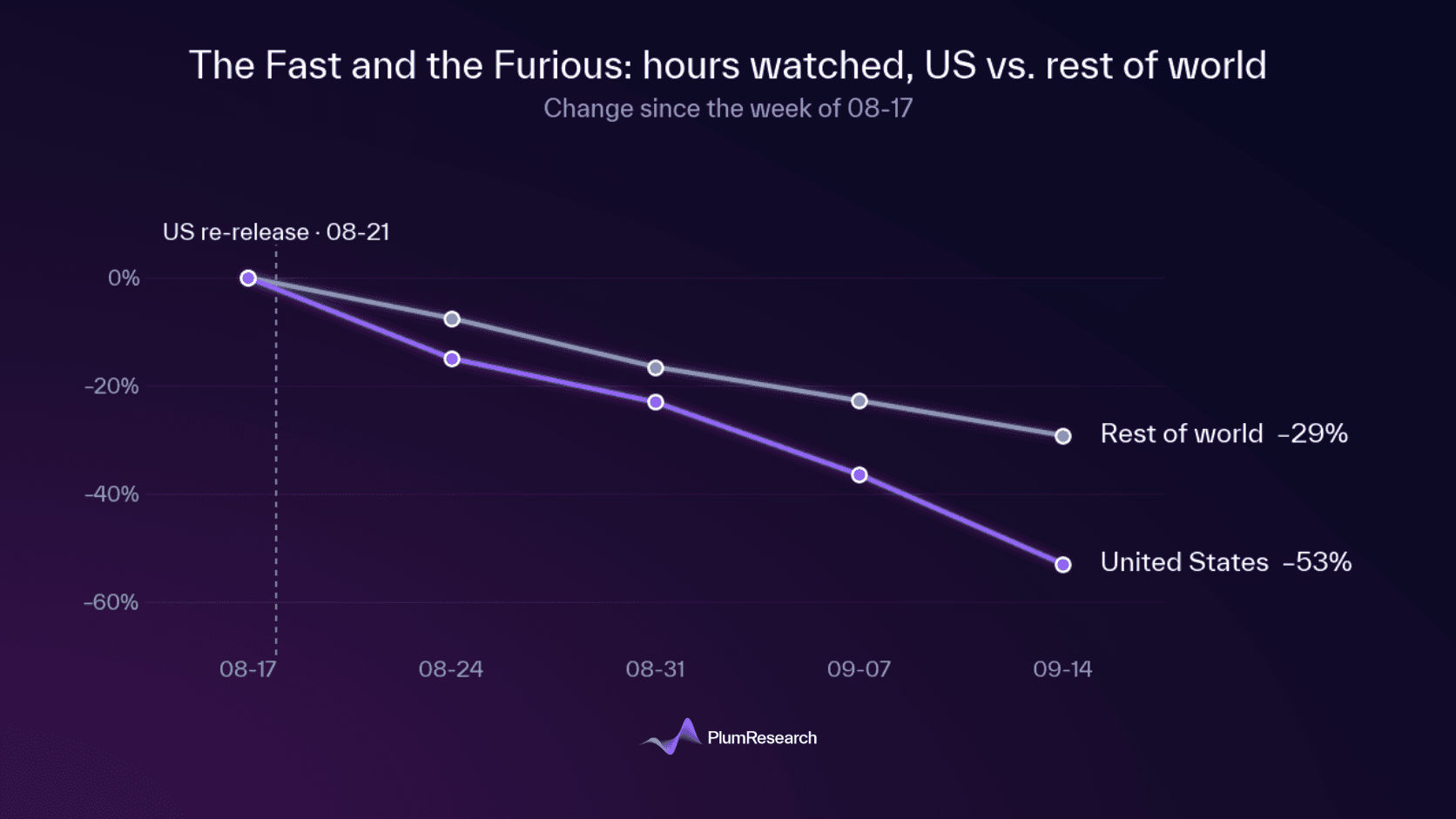
For its 25th anniversary, The Fast and the Furious returned to cinemas only in the United States and only for one week, from August 21, 2026. From the re-release week to mid-September, viewing of the film fell both in the US and across the remaining markets combined, but almost twice as fast in the US: down 53% there, compared with 29% elsewhere. That pattern is consistent with a short, local boost fading once the screenings ended.
Star Wars: when an anniversary gets lost in the crowd
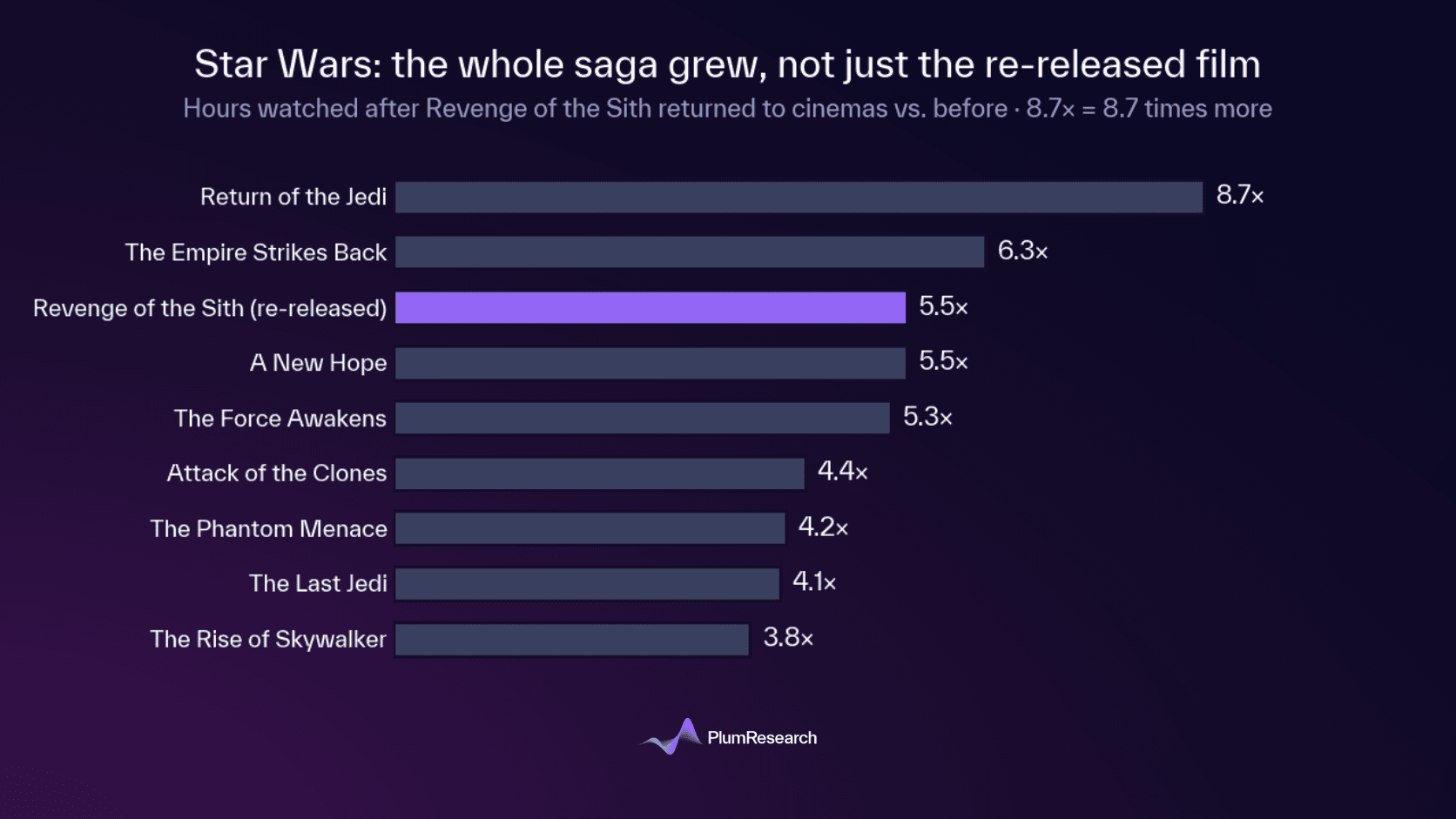
Star Wars: Revenge of the Sith returned to cinemas on April 25, 2025, for its 20th anniversary. In the five weeks following the re-release week, it was watched on average 5.5 times more than in the three weeks before. In the same period, however, the second season of Andor premiered (April 22), and May 4 brought Star Wars Day. In the peak week, Andor accounted for 56% of total hours watched across the franchise. Return of the Jedi (8.7 times) and The Empire Strikes Back (6.3 times) grew faster than the film that was actually back in cinemas. In this case, the effect of the re-release itself cannot be separated out.