

Euphoria Season 3: Big Viewership, Mixed Ratings, Fragmented Buzz
Euphoria S3 proved that trending no longer means one clear thing.
Streaming libraries contain a multitude of different titles which facilitate different viewers habits. Some are lean-back comfort viewing, some satisfy niche tastes. Then there is content that stimulates a very active audience response, with anticipation built for months or even years. While doubtlessly positive for the reach of such a show, the longer the wait the higher the expectations, which after a significant delay can be impossible to meet.
One of those titles is Euphoria, one of HBO Max's biggest and most talked-about originals. The first season of Euphoria was released in June 2019, the second one in January 2022. Since then, Euphoria fans had to wait for over 4 years for the third and final season. So when it finally arrived in April 2026, the real question wasn’t just whether it would trend but rather how big the reaction would be and whether it was worth waiting for.
The Success of Season 3
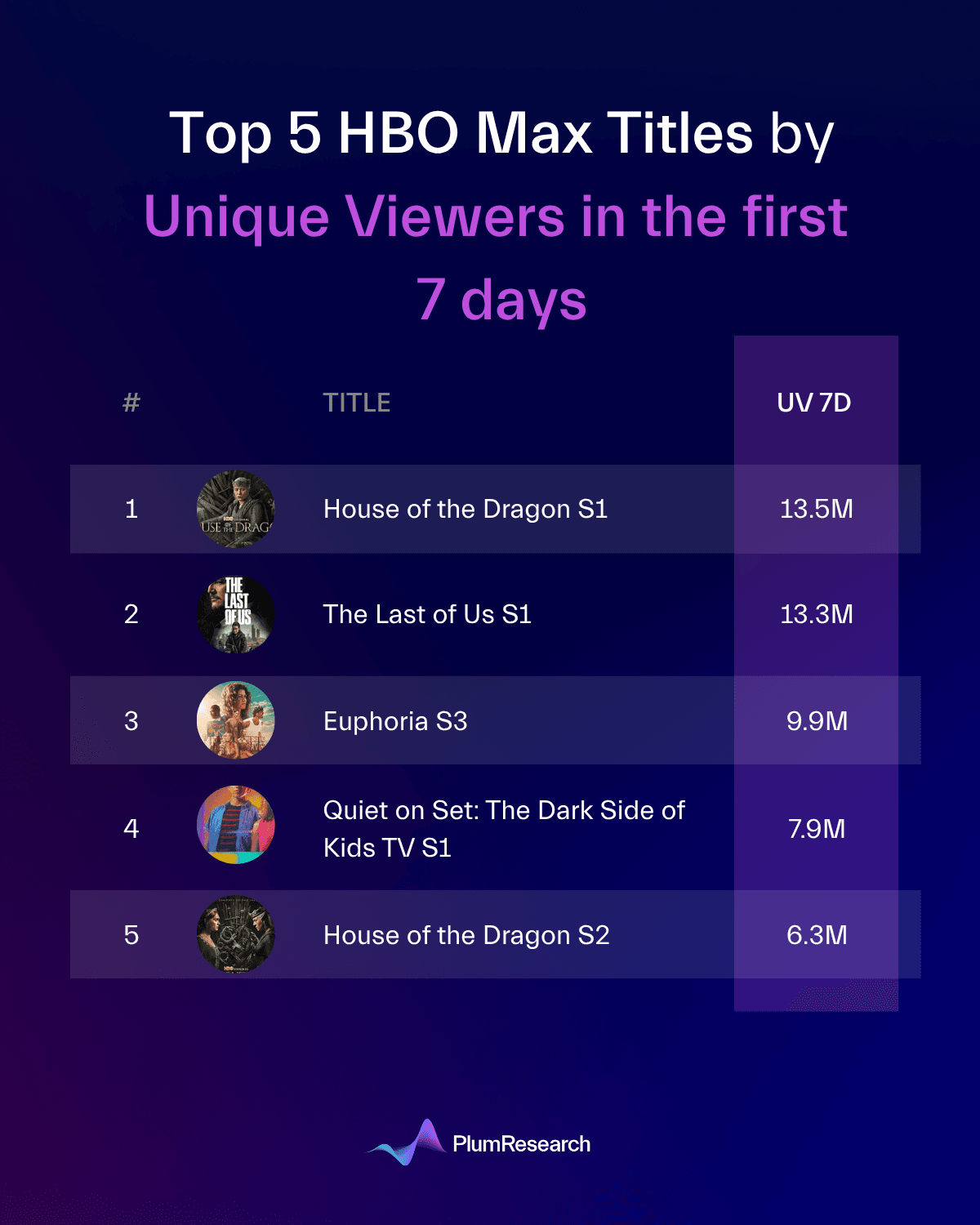
From a pure scale perspective, Season 3 clearly triumphed on HBO Max since the very first day. It became HBO Max’s biggest release in terms of the first 7 and 28-day viewership since the first seasons of The Last of Us and House of the Dragon, ranking third overall across those benchmarks.
Beyond viewership, anticipation that had been built for years played a significant role in bringing audiences back to the platform. 23% of users who reactivated on HBO Max in April returned because of Euphoria, making it the second-strongest reactivation driver in April across six tracked platforms, falling behind only Invincible on Prime Video. And for a show returning after such a long break, that’s exactly what streamers hoped for.
Viewership, Ratings, and Buzz Tell Different Stories
Once you move beyond the viewership and scale perspective, the picture becomes much more complicated. Euphoria Season 3 is a perfect example of how viewership, ratings, and online conversations don’t always align.
The trailer alone generated enormous interest, driving nearly a 120% increase in viewership. Yet despite that excitement and strong overall consumption, Season 3 ended up with the lowest IMDb rating of any Euphoria season. High demand clearly did not translate into high audience satisfaction.
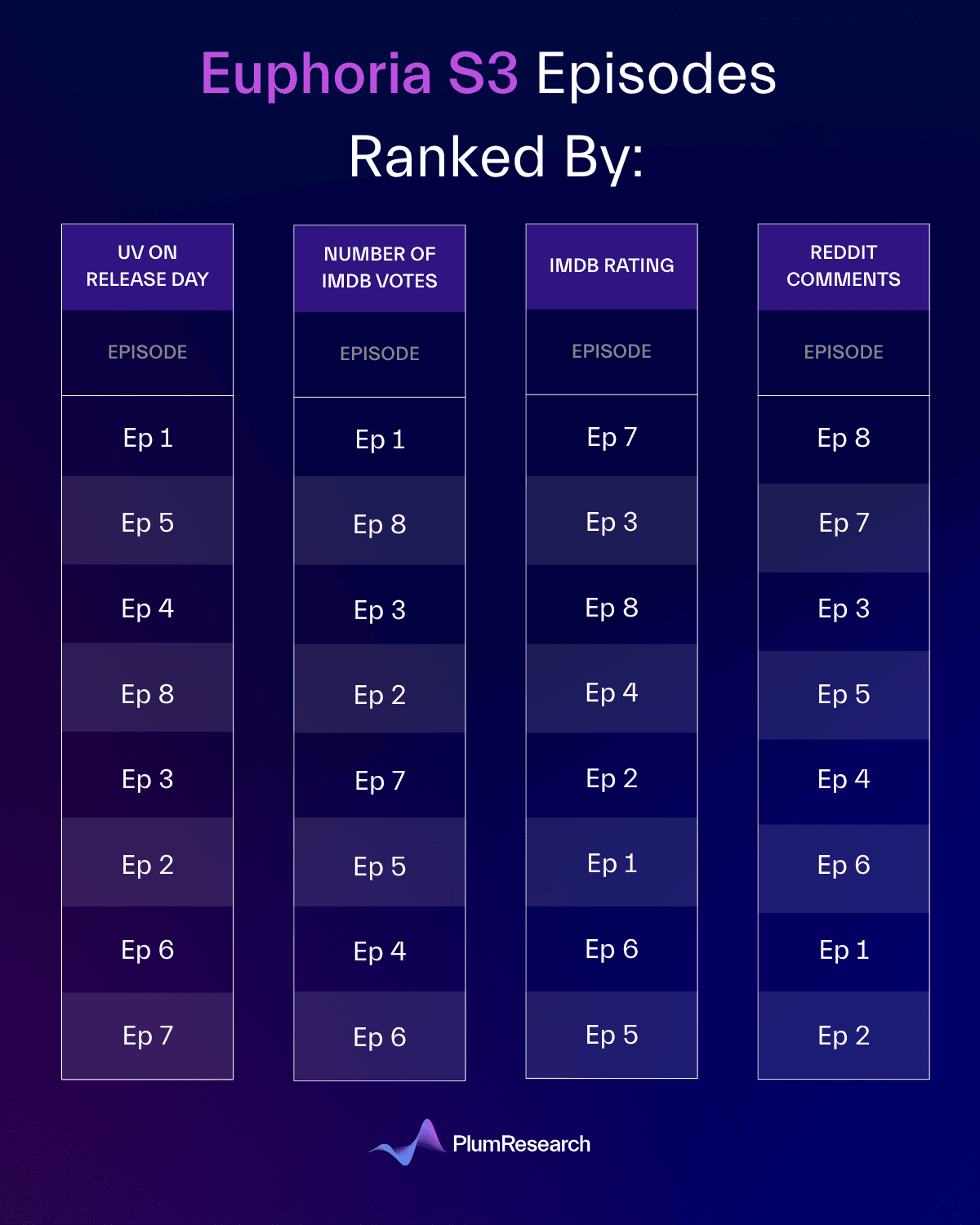
Viewing patterns throughout the season also reveal a more nuanced story. Episode 1 attracted the highest number of unique viewers on its release day, but by the time Episode 8 arrived, audiences weren't logging in just for the finale. A significant share of users were still catching up on earlier episodes. In fact, around 25% of all viewers watching Euphoria on the day Episode 8 was released were watching other episodes than the finale itself. This suggests that while weekly releases drive engagement, viewers increasingly consume shows on their own schedule rather than following a strict release cadence.
The disconnect between viewership, ratings and buzz becomes even more apparent when looking at the individual episodes. Depending on which metric you choose, the ranking of episodes looks completely different. Episode 5 is one of the clearest examples. It was the second most-watched episode on its release day, yet recorded the lowest IMDb rating of the season and sparked significant online controversy. One of the most discussed moments featured Sydney Sweeney’s character Cassie in a stylized fantasy sequence tied to macrophilia, where she appears as a giant version of herself interacting with a man in a fetish-driven scenario. While the scene generated heavy online conversation and debate, it did not translate into positive audience reception or higher ratings.
Episode 7 is perhaps the best example of the opposite dynamic. It had the lowest viewership in terms of the number of viewers on the day of release, yet achieved the highest IMDb rating and generated the second strongest discussion on Reddit. Interestingly, Episode 7 also contained the season’s biggest shock, the unexpected death of a major character. One possible explanation is that the moment spread quickly across social media, allowing viewers to engage with the conversation even without immediately watching the episode. In an era of instant spoilers, key moments of shows can become social currency before audiences even press play.
The Battle for Attention
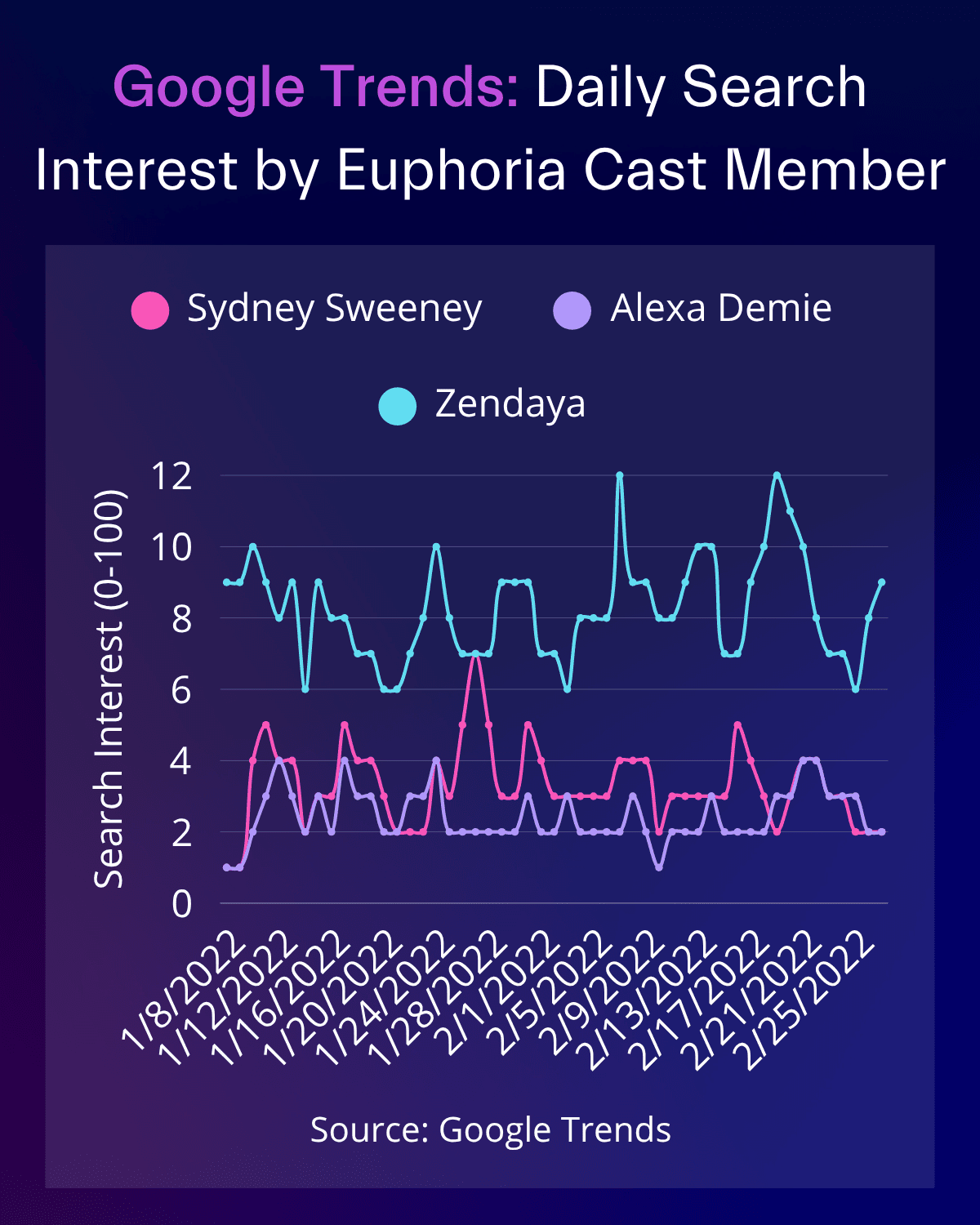
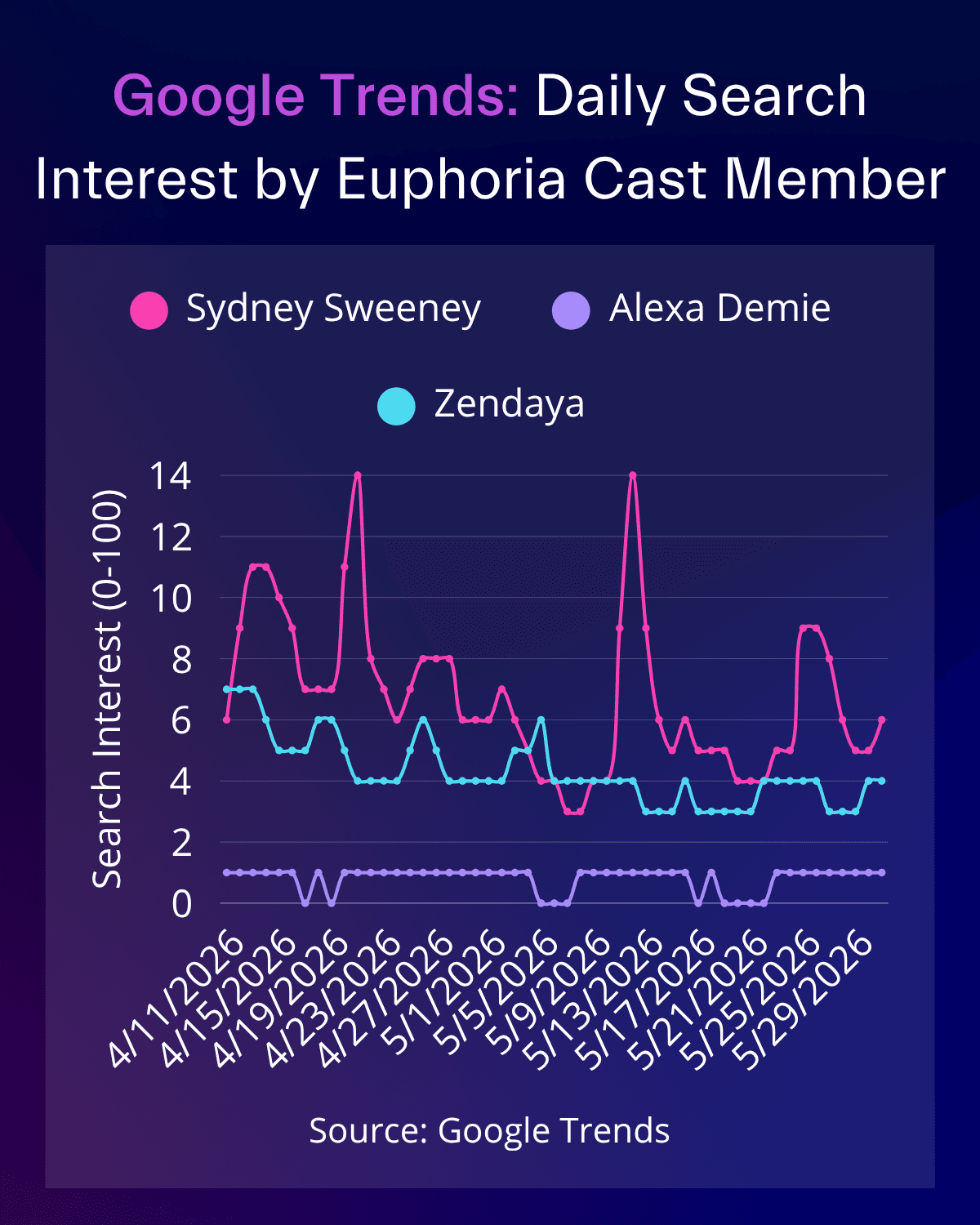
A similar split between ratings, trends and viewership appears at the character level. While Zendaya dominated Google searches during the release of Season 2, this time it was Sydney Sweeney who became the most google’d cast member. Intriguingly, the Google Trends analysis tells only part of the story. On TikTok, neither Zendaya nor Sydney Sweeney took the lead. Instead, the character of Maddy played by Alexa Demie stole the spotlight, with four of the five most-liked Euphoria TikToks featuring Maddy edits and generating nearly 10 million likes combined.
The increased attention around Sydney Sweeney also extended beyond Euphoria. Several of her other projects, including Anyone But You, Immaculate, The Housemaid, and The Voyeurs, saw increased viewership on Hulu and Prime Video during April, suggesting that buzz around a single star can create a halo effect across multiple titles and platforms.
Sydney Sweeney led search trends, Maddy dominated TikTok, and both helped drive engagement beyond the show itself. Just like episode performance, audience attention is fragmented. The answer to who is trending depends entirely on where you look, what metric you use, and which audience you're measuring.
So, Did It Trend?
The answer is an easy yes, but not in one way.
Euphoria Season 3 drove strong viewership and reactivation, proving its continued power as one of HBO Max’s key originals. But beneath that, the signals fractured. Ratings didn’t match consumption, episodes performed differently depending on the metric, and attention split across platforms and characters.
For a show driven by pop culture, Euphoria Season 3 never told just one story. The most-watched episode wasn't the highest rated. The biggest social moments didn't always translate into viewing. And the characters dominating Google weren't necessarily the ones dominating TikTok. Euphoria remained a cultural phenomenon, but exactly what people were reacting to depended entirely on where you looked.
Rather than producing one clear measure of success, Season 3 of Euphoria became one of the clearest examples of how viewership, ratings, and buzz each tell a different story and how those stories no longer have to match.