

When Dolly Parton passed away, the catalogue answered
When a beloved artist dies, the first instinct is to reach for their work - to put on the film, the song, the show that made them feel like family. ...
When a beloved artist dies, the first instinct is to reach for their work - to put on the film, the song, the show that made them feel like family. That instinct used to be invisible. Now it shows up in the data almost immediately. Dolly Parton passed away on August 25, 2026, at the age of 80, and in the days that followed her audiences did what audiences now do: they pressed play. What our numbers show is that a death, like a big premiere, moves streaming in two distinct ways at once - people return to what's already there, and platforms bring back what isn't.
The titles already streaming
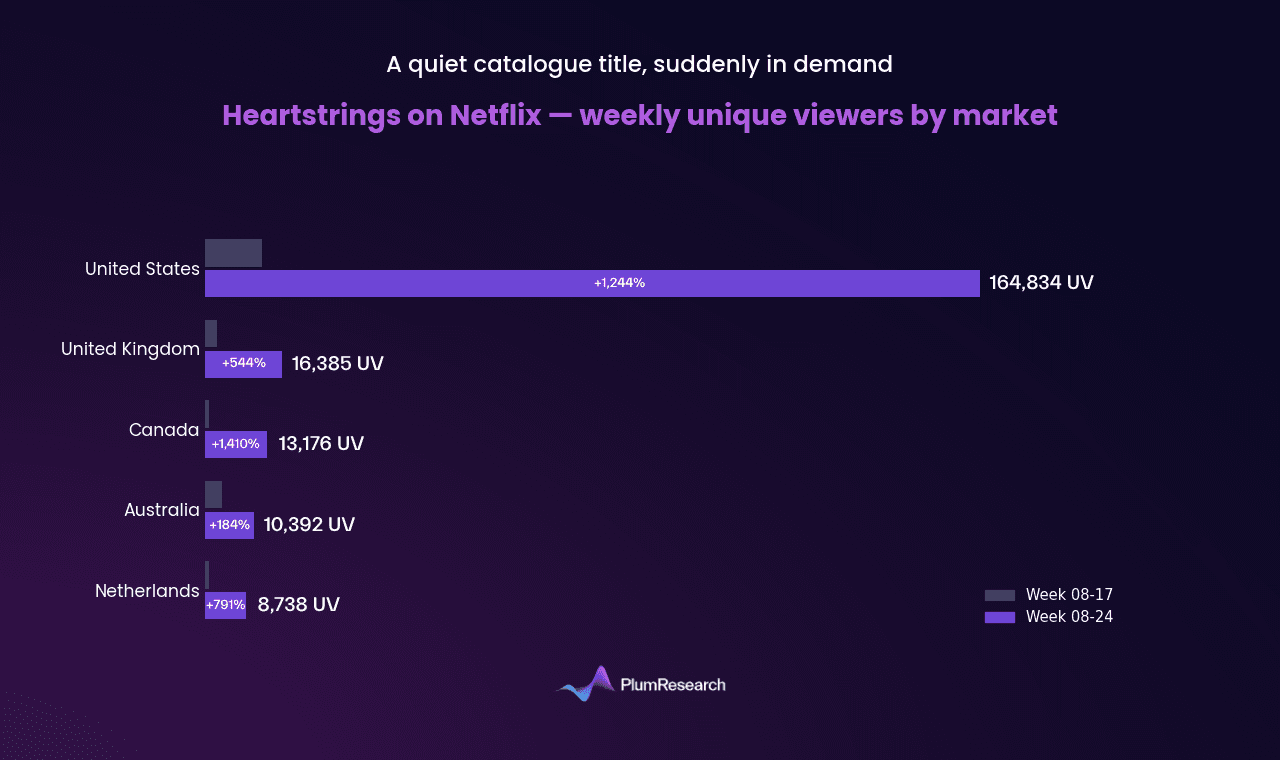
The clearest signal came from the titles already sitting in the libraries. Dolly Parton's Heartstrings, the Netflix anthology built around her songs, saw its audience multiply in the week she passed. In the United States, weekly viewers climbed from roughly 12,000 to 165,000 - more than a tenfold jump - with the UK, Canada, Australia and the Netherlands all climbing sharply too.
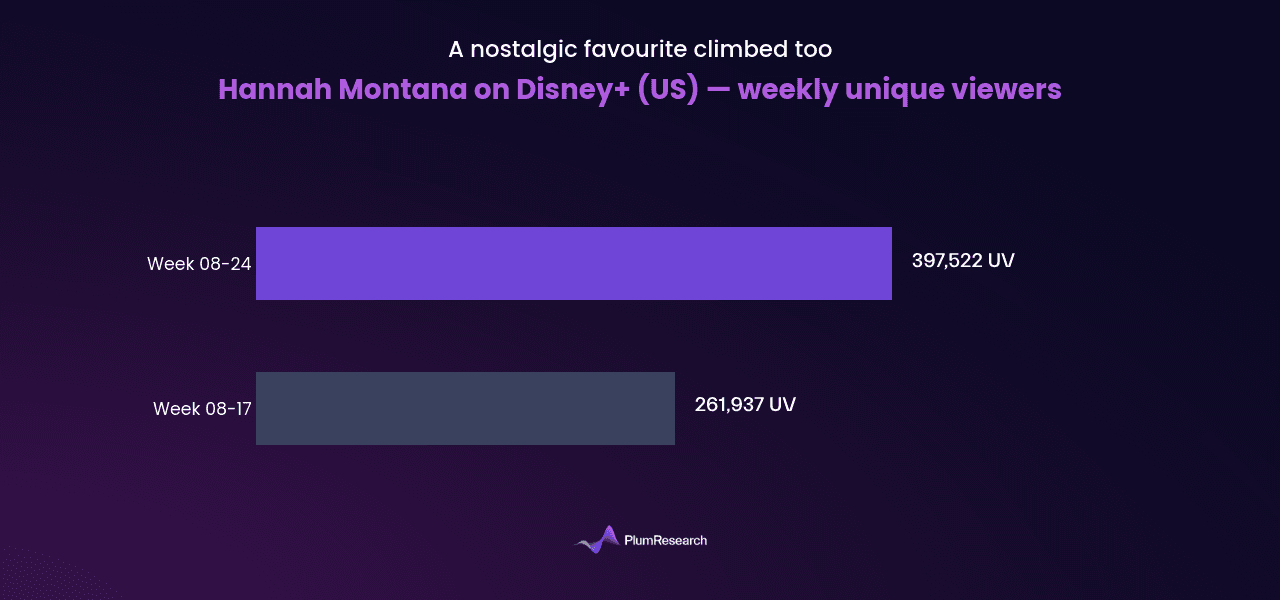
It wasn't only the niche titles. Hannah Montana, where Parton played "Aunt Dolly" to her real-life goddaughter Miley Cyrus, rose 52% week-over-week on Disney+ - a Disney Channel series that hasn't aired in over a decade, climbing sharply as the news broke.
Platforms brought the classics back
The second movement was the platforms' own. 9 to 5, Parton's 1980 breakout and the source of her signature song, had been absent from Netflix for a decade. On August 31 Netflix returned it to its US library specifically to commemorate her; Hulu and Prime Video re-featured it the same month. In its first week back, the film drew roughly 1.9 million viewers across the three services and climbed to number two on Hulu's movie chart.
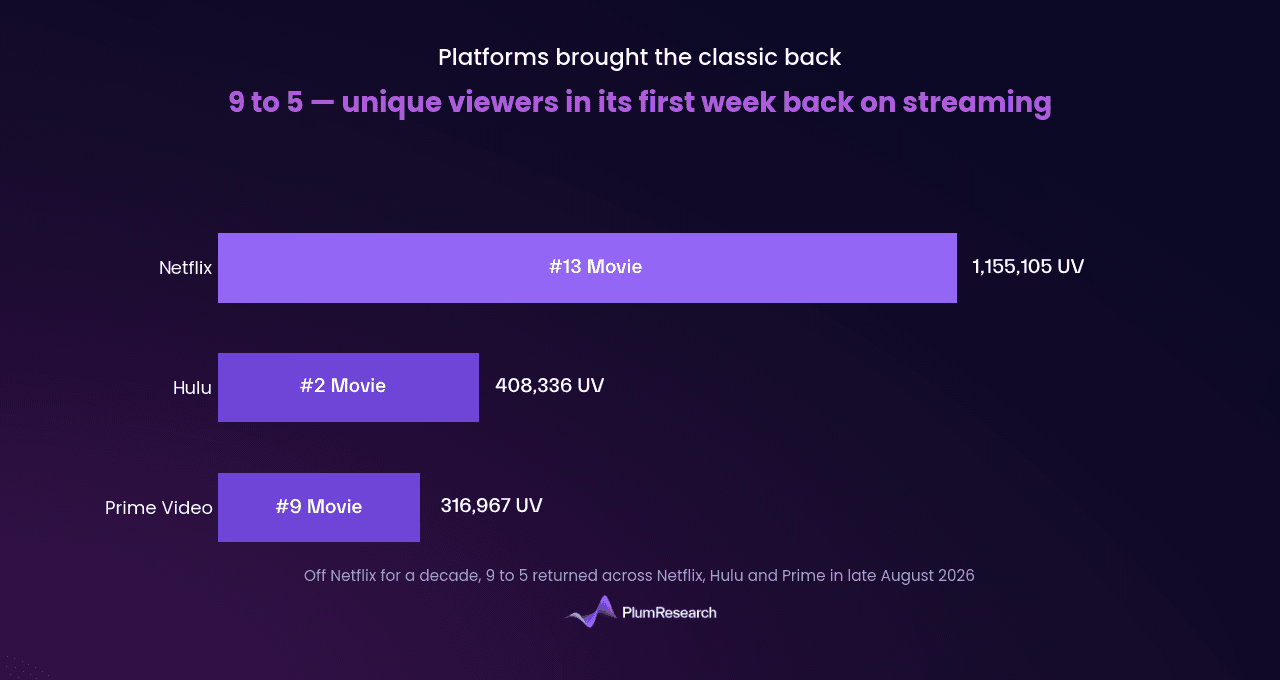
That is the other half of the story, and the more commercially interesting one. A death doesn't only send existing viewers back to a library - it makes that library valuable enough that platforms re-acquire and re-merchandise it overnight. The catalogue stops being dormant and becomes, briefly, prime real estate.
For all the distance between a film premiere and a public mourning, the streaming effect rhymes: a cultural moment is a demand event, and its value lands on whoever holds the rights when it arrives. Parton's case simply compresses it - renewed watching of what was already there on one side, deliberate re-platforming on the other, both inside a single week.